Showing posts with label Education. Show all posts
Friday, 14 August 2015
New Lough Hide
Recently the new hide at The Lough was finished. We are currently looking to get some information in the hide to tell visitors a little bit about the NNR and Natural England. We put a diary for people to put there sightings. It was lovely that after two days it had already been used and here are a few pictures of what was in it below.
Wednesday, 12 August 2015
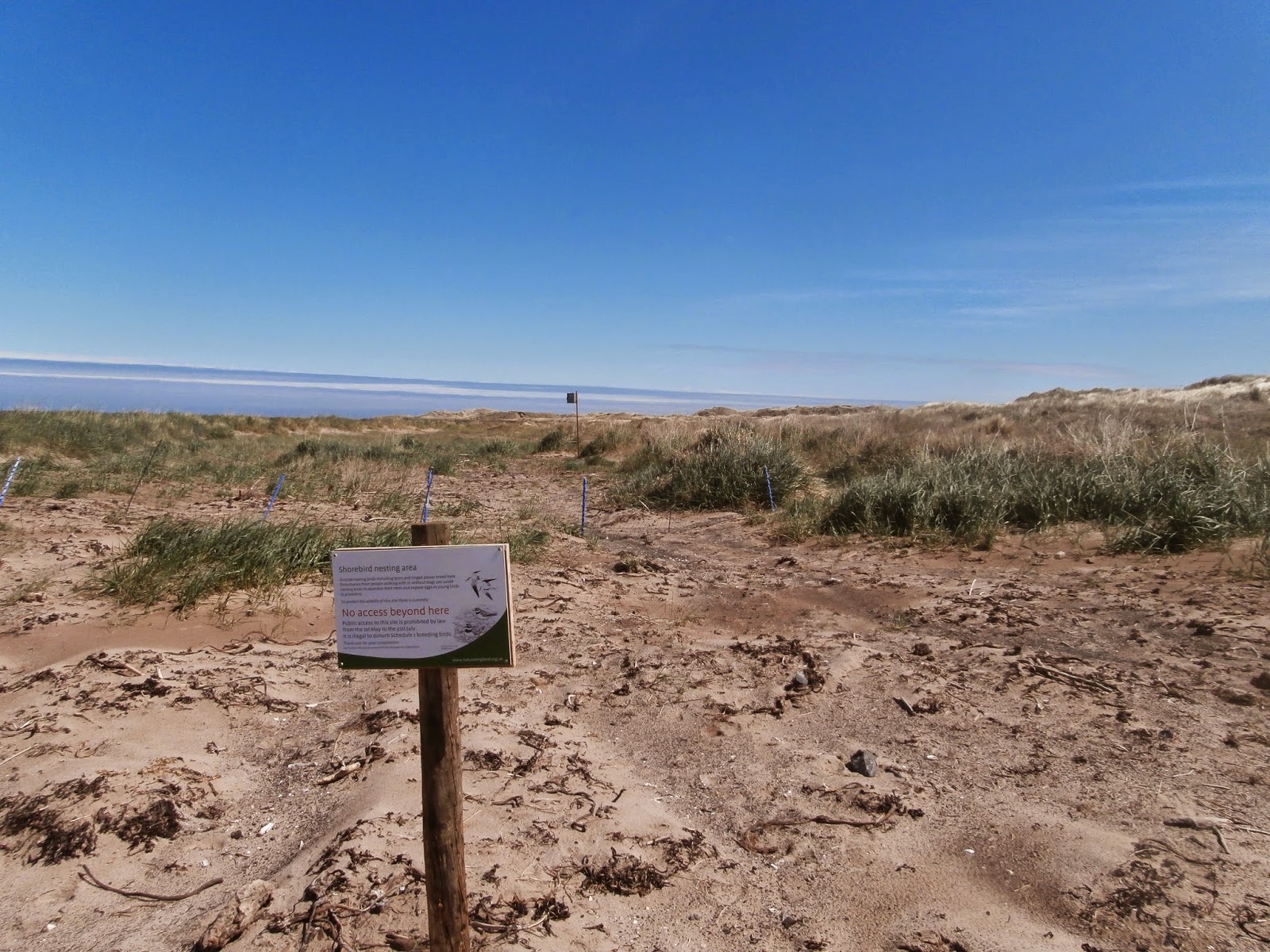
Shorebird season round up
Well that's us all packed up for another season - fences are in and signs are down. Chantal - project co-ordinator for Northumberland Little Tern Project has put together a summary of the season below:
Just as the summer is almost over, the
shorebird breeding season is coming to an end. Those who have been lucky enough
to visit the beaches this summer;relax, walk their dog and enjoy having a
wander may have seen shorebirds such as ringed plovers and oystercatchers nesting
on the sand.
However humans are not
the only visitors that gather at that time! Several tern species (including
Arctic and Common terns) make the journey back to the UK from their wintering
grounds to breed and nest on our beaches. Among them is the charismatic ‘Little
Tern’ (Sternula albifrons) which are
the second rarest breeding seabird in the UK. Aptly named, they are no bigger
than a blackbird; however they make a lengthy journey every April travelling up
from their wintering grounds of South and West coast of Africa to the UK.
It has been a difficult
season this year with low recruitment of some species like our rare little
tern, the second rarest seabird to breed in the UK of which there are only 45
pairs in Northumberland. However all shorebirds are affected by predation, erosion,
tides, disturbance and especially at the start of this summer: the cold
weather.
![]() |
| One of our rarest shorebirds the Little Tern nests along the Northumberland Coast. |
Although breeding
shorebirds are anywhere on the beache, this year, potential sites were cordoned
off with fencing. A variety of fencing was used to make for optimum success.
Approximately 2.5km of blue exterior rope was used in addition to 1km or
electric wire and 1.5km mesh netting. Electric fencing is a good defence in
preventing mammalian predators such as foxes, but the blue exterior fencing has
worked very well in warning beach-users from
walking too close to the scrapes and disturbing the incubating birds of
eggs/chicks, thus reducing the risk of nest failure due to exposure.
| Wardens have been out on the beach all summer speaking to the public and monitoring shorebirds |
In addition, 40
information signs as well as Shorebird leaflets were placed at access points to
beaches informing the public of the summer restrictions and presence of
breeding shorebirds. One of the main signs focused on asking people to keep
their dogs on a lead to avoid disturbing breeding birds in both the dunes and
on the beaches.
![]() |
| Our Shorebird leaflet available to download on the blog |
Over the summer we have
had a hardworking team of Shorebird Wardens and volunteers who have been both
observing shorebirds and engage the public. They have been either on-site informing people about the reasons for shorebird decline or at events such as ‘Shorebird
Celebration.’
We also had an engaging
end of season discussion between staff and volunteers from both Lindisfarne NNR
and the National Trust discussing the success of shorebirds across
Northumberland.
As the season is now
over, we can now say that with all of these contributions, the shorebirds breeding
season has resulted in high productivity, with good numbers of Common, Arctic
and Little terns and average numbers for ringed plovers.
For anyone who would be interested
in joining our numbers and protecting our rare little terns & other
important shorebirds next summer, please get in contact:
northumberlandlittleterns@gmail.com
| Fencing all cleaned off and ready to be stored for next year. |
Monday, 27 July 2015
Lindisfarne Schools Project
24 Young Nature Wardens from
Rothbury First School have been exploring Lindisfarne during July with reserve
warden Mhairi and other Natural England staff.
They have done some exciting activities including rockpooling, butterfly
spotting and beach art. They were an
enthusiastic bunch and took their Nature Warden duties seriously; explore, look
after yourselves and the environment and have fun!
By Lydia Nixon, CSF River Basin Co-ordinator
Monday, 13 July 2015
School group explore the reserve
At the weekend we had a school group from Ponteland out on the reserve. They came to explore the reserve using bikes. We had a great day trying to spot as many species as possible whilst we rode between activities with Dave and Heather .
There is no cycling on the NNR itself so bikes were left securely on the cycle paths and at designated spots while the kids walked onto the reserve for beach art, rock pooling and exploring.
Friday, 11 April 2014
11th April: Little Tern Recovery Project
Every year a special type of sea bird returns to our shores making a journey of thousands of miles. There are several types of terns that make Northumberland their home in the summer taking advantage of the marine larder that is only a few flaps away.
Our smallest Tern species is the Little Tern which travels each April to breed at fewer than 60 sites nationally. After navigating its way from the depths of Africa to our shores the Little Terns story is not over. It has to find its place amongst the busy beaches, which is becoming increasingly difficult with climate change and coastal development.
It is because of the threats to their survival that a national partnership project supported by EU LIFE+ programme has been established. What does this mean for Northumberland? With strong established colonies right here on the coast we have been included within the project. Natural England, National Trust, Northumberland AONB partnership and the RSPB have formed a partnership and recruited a project worker to work between established sites and any new satellite sites where ever they may crop up. This includes the Northumberland SPA from Low Newton through to LNNR and potentially further afield. The project is running nationally for 5 years and 3 years in Northumberland.
With the first sightings of our early arriving Sandwich Tern last week, it won’t be long before the breeding season gets fully underway. Everyone can help Little Terns and shore nesting birds on the Northumberland Coast. If you are visiting Holy Island or any of our brilliant beaches over the summer, you can help by keeping dogs on leads and take note of any signs or fenced off areas where shore birds may be breeding.
But wait there are more ways to help! We are currently recruiting volunteers to help survey new shore bird sites as well as wardens for established areas. Any help is appreciated whether you can give a large or small amount of your time. If you want more information or have any sightings, please get in touch on 07768310629
I hope to write regular updates for the blog and keep everyone up to date with the project as the season goes on.
The Little Tern
Our smallest Tern species is the Little Tern which travels each April to breed at fewer than 60 sites nationally. After navigating its way from the depths of Africa to our shores the Little Terns story is not over. It has to find its place amongst the busy beaches, which is becoming increasingly difficult with climate change and coastal development.
An example of a potential Little Tern breeding site, complete with decoys and a lure that plays Little Tern calls
It is because of the threats to their survival that a national partnership project supported by EU LIFE+ programme has been established. What does this mean for Northumberland? With strong established colonies right here on the coast we have been included within the project. Natural England, National Trust, Northumberland AONB partnership and the RSPB have formed a partnership and recruited a project worker to work between established sites and any new satellite sites where ever they may crop up. This includes the Northumberland SPA from Low Newton through to LNNR and potentially further afield. The project is running nationally for 5 years and 3 years in Northumberland.
With the first sightings of our early arriving Sandwich Tern last week, it won’t be long before the breeding season gets fully underway. Everyone can help Little Terns and shore nesting birds on the Northumberland Coast. If you are visiting Holy Island or any of our brilliant beaches over the summer, you can help by keeping dogs on leads and take note of any signs or fenced off areas where shore birds may be breeding.
This is how the shore bird sites will look once the fencing and signs are up
But wait there are more ways to help! We are currently recruiting volunteers to help survey new shore bird sites as well as wardens for established areas. Any help is appreciated whether you can give a large or small amount of your time. If you want more information or have any sightings, please get in touch on 07768310629
I hope to write regular updates for the blog and keep everyone up to date with the project as the season goes on.
Mhairi Maclauchlan
Project Co-ordinator EU LIFE+ - Little Tern Recovery Project NorthumberlandMonday, 17 March 2014
17th March: A "successful unsuccessful litter pick"
Reserve staff were recently contacted by a student at Cranmer Hall Theological College, Laura, who organised a litter pick on Holy Island to help remove tidal litter that is washed up on the Reserve's shores as part of a community outreach event.
Laura has kindly written an article for us documenting this trip and the group's motivation for doing so:
When I say the words “trainee vicar” to you, what do you
think of? A balding, middle-aged man in ill-fitting black robes, stuttering and
stumbling over a poorly prepared sermon while a scattered congregation of nine
or ten elderly folk struggle to stay awake? A group of over-enthusiastic
hopefuls shoving flyers and tracts into the faces of unsuspecting pedestrians
who are trying desperately to avoid eye-contact? Or maybe just an everyman wearing
a dog-collar and an L-plate?
Would the words “litter-pick” cross your mind? I don’t mean
just picking a crisp packet off the pavement on your way home from church – I’m
talking about sturdy walking boots, big black sacks, fancy litter-picking
gadgets and a whole coastline littered with…well, litter. Well, when a group of 5 trainee vicars from
Cranmer Hall, Durham, arranged a trip to Lindisfarne to get involved in the
community, this is exactly what we planned to do (along with other activities
which ranged from teaching at a school to blessing animals in the market
square…but those are stories for another time).
Before I tell you about our trash-filled trek, I hope you
don’t mind if I explain a bit more about our motivation for doing the
litter-pick.
When we first spoke to Paul Collins, the vicar of St Mary’s
Church on the Holy Island of Lindisfarne, about what he’d like us to do on our
community outreach weekend in March, he told us he’d like us to do something
that encouraged both locals and visitors to appreciate the natural beauty of
the Island. If you’ve ever been to
Lindisfarne, you’ll understand what he means. The shell-strewn shores and
patchwork farmlands are framed by a vast stretch of ocean and an endless sky.
The lonely sand-dunes on the north of the Island seem, at a first glance, to be
a desolate wilderness, but the long grasses are the hiding-place of a variety
of flora and fauna. You can hear the eerie cries of the seals from their
resting places around the Island, and a symphony of bird-calls from the avian
visitors. Lindisfarne is, in its own desolate and wild way, an extremely
beautiful and peaceful place.
Shoreline of Lindisfarne NNR (James Durrant)
Tidal borne litter is, however, a major hazard – both to the
beauty of the Island and to the wildlife who make their homes there. While the
wonderful folk of Lindisfarne NNR do a fantastic job of preserving the natural
state of the Island, the daily drop-off of debris from the tides of the North
Sea means that keeping the beaches clean is an endless task. One of the best
ways to show your appreciation of nature is to help care for it – and that’s
what one pair from the Cranmer crew decided to do. So, on the 8th
March 2014 at 10am, my partner-in-picking and I set off with the litter-picking
gear that the NNR very kindly provided for us and went to find our team of
volunteers.
Now, I’d love to tell you that we managed to build a huge
network of support and had hundreds of people turning up on the day, fighting
over the 6 litter-pickers and eager to save the planet. As you may have gathered from the title of
this blog, however, the turnout wasn’t exactly terrific – late advertising on
our part and a high tide meant that the total number of volunteers was 2.
Including us.
A happy litter picker! (James Durrant)
Unperturbed by this little setback and determined to go
through with our plan, we wandered around the town in a brave attempt to build
up a following of vistors who were inspired by our efforts and/or felt sorry
for us. When we got to the edge of town the total number of volunteers remained
at 2 (including us), so we set off for the beach near Emmanuel Head on the
north shore of the Island and managed to fill almost 2 bags with plastic bags,
drinks bottles, half an orange buoy, a few bags of dog waste and an assortment
of unidentifiable objects. It was only
when the bags started to split and we had to use the spare ones to reinforce
them that we decided to call it a day.
Now, I know that 2 bags of litter is a tiny drop in a huge
ocean of trash, but I wouldn’t say the pick was entirely unsuccessful. For one,
2 bags is better than nothing! Every crisp packet you pick off the pavement is
one less crisp packet on the pavement. We also had loads of fun – litter
picking is hard work but it’s a great way to build up team spirit (even if it’s
just a team of two people!) and you feel really satisfied afterwards. The
plastic bag you took off the beach might have been a deathtrap for a curious
gannet, so you’re making a lifetime of difference.
So, if you’re planning a litter-pick, go for it! It’s really
easy to organise – just contact the environmental guys in the area you’re
interested in as they’ll be super-keen for you to help out and give you loads
of guidance. Make sure you get a group together in advance too. Then it’s just
a case of turning up on the day and picking up as much litter as you can carry
– but remember you have to carry it back too!
If trainee vicars from Durham can do it, then so can you!
Litter-laden at Emmanuel Head, Holy Island (James Durrant)
Monday, 10 February 2014
31st January: Two days in the life of the Window on Wild Lindisfarne
We invite volunteers and others who work with the Reserve team to write pieces for this blog. Today we have a special blog post from one of our volunteer guides, David, giving an insight into what it is like to be a guide on Lindisfarne NNR. David explains how the Reserve, normally busy with visitors, can have quiet days too!
David tells us:
David tells us:
“The afternoon of Tuesday 21st January was sunny and almost still but cold. The Window on Wild Lindisfarne building was very busy both inside and out. Visitors arrived at the rate of 45 adults per hour plus children and dogs. Several couples, some with babies were staying on the Island and all the rest bar one couple were from a distance, all from further south than Newcastle. Lots of birds enjoying the flooded scrape. About 100 each of Brent geese, curlew, teal and lapwing. They were mostly on the scrape but commuted to the next door field to the west. Plus lots of gulls and starlings. Having packed up, I walked round the water's edge to the Lookout on Wild Lindisfarne (old Coastguard Tower) to discover that the Brent geese had flown over the building just as far as the shoreline in the harbour near the upturned boats.
However, on the following Monday afternoon (27th) it was all together different. Cold, wet and very windy. Like a chump I misread the tide tables and arrived early for the safe crossing but it was very interesting to watch both humans and birds during my wait of about 30 minutes! Having stopped close to the water's edge on the causeway there were lots of birds to see. Many small groups of shelduck flew over southwards at about 20 metres height. About 10 each of oystercatchers and curlew paddled about. A huge flock of small waders flew about like a murmuration of starlings but I couldn't identify them. Amazingly, there was a long straight line of Brent geese parallel to the causeway about 500 metres to the north (I set up the telescope) and every so often about 25 would take off and fly south over me, very close, at about 5 metres height. Some of the humans were impatient. By now there were 2 white vans and 4 cars waiting to drive over to the Island. One car driver set off into the water which soon covered the wheels and he very, very quickly reversed out.
On reaching the Window building there were only gulls on the scrape and they promptly took off and then no birds (or people) for an hour. I gave up to go home and it was really windy outside, hence the lack of people and indeed, the main car park had only 2 cars in it as I left!”
David, and our other volunteers who act as guides in the Window on Wild Lindisfarne, do a fantastic job of informing visitors about the amazing wildlife of Lindisfarne NNR. David's story shows how dedicated they are, and that even on bad weather days there is still much to see on the Reserve!
Drake teal: Europe's smallest duck, and one of our most beautiful, can be seen from the Window on Wild Lindisfarne throughout the winter
However, on the following Monday afternoon (27th) it was all together different. Cold, wet and very windy. Like a chump I misread the tide tables and arrived early for the safe crossing but it was very interesting to watch both humans and birds during my wait of about 30 minutes! Having stopped close to the water's edge on the causeway there were lots of birds to see. Many small groups of shelduck flew over southwards at about 20 metres height. About 10 each of oystercatchers and curlew paddled about. A huge flock of small waders flew about like a murmuration of starlings but I couldn't identify them. Amazingly, there was a long straight line of Brent geese parallel to the causeway about 500 metres to the north (I set up the telescope) and every so often about 25 would take off and fly south over me, very close, at about 5 metres height. Some of the humans were impatient. By now there were 2 white vans and 4 cars waiting to drive over to the Island. One car driver set off into the water which soon covered the wheels and he very, very quickly reversed out.
Flock of oystercatcher: these striking birds can be seen from the causeway
On reaching the Window building there were only gulls on the scrape and they promptly took off and then no birds (or people) for an hour. I gave up to go home and it was really windy outside, hence the lack of people and indeed, the main car park had only 2 cars in it as I left!”
David, and our other volunteers who act as guides in the Window on Wild Lindisfarne, do a fantastic job of informing visitors about the amazing wildlife of Lindisfarne NNR. David's story shows how dedicated they are, and that even on bad weather days there is still much to see on the Reserve!
Thursday, 16 January 2014
10th January: Events for the New Year
It's time to blast away the cobwebs at Lindisfarne NNR! It's back to work after New Year on the Reserve which means looking to the year ahead and planning events for the upcoming months.
Reserve team have organised some drop-in events for the next few months:
On February 2nd a drop-in birdwatch is being held at the Fenham-Le-Moor hide - join us for your last chance to see light-bellied Brent geese and wading birds from our two-storey hide.
On February 19th you can bring the kids to 'Build-A-Bird' at the Window on Wild Lindisfarne for half-term - create fun craft versions of the birds you can see outside the Window.
Join us on March 16th for our birdwatch at Budle Bay - this is a great chance to see any late leaving wintering birds, and maybe even spot some early spring migrants!
You can see full details on our dedicated Events page, keep checking back for new events being added. All of our events are free.
Reserve team have organised some drop-in events for the next few months:
On February 2nd a drop-in birdwatch is being held at the Fenham-Le-Moor hide - join us for your last chance to see light-bellied Brent geese and wading birds from our two-storey hide.
On February 19th you can bring the kids to 'Build-A-Bird' at the Window on Wild Lindisfarne for half-term - create fun craft versions of the birds you can see outside the Window.
Make your own flapping lapwing...
...and sandy shelduck card!
Join us on March 16th for our birdwatch at Budle Bay - this is a great chance to see any late leaving wintering birds, and maybe even spot some early spring migrants!
You can see full details on our dedicated Events page, keep checking back for new events being added. All of our events are free.
Monday, 22 July 2013
16th July: John Muir Award group help out on the NNR
Last Tuesday, another gloriously sunny
and hot day, we had an excellent group of students from Berwick Middle School
visit the Reserve to get stuck into litter collection and invasive plant
clearance. These activities counted towards the student’s John Muir Award, the educational initiative of the John Muir Trust. This is a fantastic way for young people to learn about conservation and how they can care for their natural environment.
The day began with an introduction to the Reserve, then
straight into a litter pick around the East shore of Budle Bay. The students saw why it is important to carry out regular litter
picks in tidal areas, as we filled many bags with parts of glass bottles,
pieces of plastic and old fishing nets – they also found some more ‘interesting’ rubbish
such as half an old bell!
Students collecting litter at Budle Bay
After lunch, it was straight back to Budle Bay – this time to begin clearing an invasive
species of cordgrass, Spartina anglica. This species, which is very vigorous and pushes out native saltmarsh communities, is a hybrid with our native cordgrass and an introduced species of cordgrass from America. The hybrid grows very quickly and takes over the mudflats, so removes
habitat for geese and wading birds which use the Reserve to feed and roost.
Digging up the Spartina - very muddy business!
Thankfully, the sun had disappeared for the afternoon so it
was cooler for digging! Spartina is quite difficult to clear, requiring digging
underneath the deep, dense roots which need removed completely or the plant will
continue to grow. The plants were collected in large bags which were dragged up
to the lay-by, which the students enjoyed very much!
Pulling a large bag full of Spartina bag up the bank - hard work!!
This is the 9th year that students from Berwick
Middle School have come to the Reserve to carry out activities towards their
John Muir Award, and since then the extent of the Spartina has reduced. We’re so grateful to the school and students for coming to help us out,
and we’re very happy to be able to offer activities like this to local groups.
If you work with school or volunteer groups and are interested in carrying
out projects on Lindisfarne NNR, please
don’t hesitate to get in touch – tel. 01289 381470 to speak to a member of
Reserve staff.
Wednesday, 17 July 2013
Successful Official Opening Event and Wild Education Day!
The Window on Wild
Lindisfarne building was officially opened on Thursday 11th July in a ceremony where Lady Rose Crossman, the owner of the land on which the Window on Wild Lindisfarne is built, was invited to formally open the building. The ceremony was also presented by Richard Patterson, the chair of the Holy Island Development Trust, and Natural England's Director of Access and Engagement, Liz Newton. It was fantastic to see the building completed and open for everyone to visit, with a great turnout of locals and visitors to watch the ceremony.
Pupils and teachers from three local First Schools were also invited to the ceremony and to a special programme of fun activities, as the first formal event held in the Window on Wild Lindisfarne and in its sister building, the Lookout on Wild Lindisfarne.
The building is open! From L-R: Dick Patterson, Lady Rose Crossman, and Liz Newton.
The purpose of the stunning Window on Wild Lindisfarne is to provide a hub for visitors to learn more about the amazing wildlife of Lindisfarne, not to mention a great viewing point from which to see birds and other wildlife in inclement weather! It is also a perfect place to hold events and educational activities for children and natural history groups from near and far.
What a turnout!
The Lindisfarne NNR team were joined by Natural England staff and volunteers from other Reserves, and our Events team who were fantastic in helping the day run smoothly.
After the opening ceremony, our Wild Education Day began! This was a great opportunity to teach local children about looking after the Reserve, to show them the fantastic animals and birds living here, and to make some craft seals and lobsters for them to take home!
Staff from Castle Eden Dene NNR talking to the schoolchildren before investigating the rockpools
We hope the schoolchildren enjoyed the day and learned lots about why the Reserve is so important. It was great to work with such enthusiastic children who got stuck right in to all the fun activities - they especially enjoyed being shown the creatures in the rock pools, and were careful to put the animals back where they were found:
Fascinated by a brittle star
Thanks from the Lindisfarne NNR team to the children, teachers and helpers from Hugh
Joicey, Scremerston, and Belford First Schools, to everyone who attended and to those who did a fantastic job of helping out. We think this is a great example of how local schools and groups can work with us on educational projects, and to help us look after the Reserve - here's to many more events in our Window on Wild Lindisfarne.
Tuesday, 9 July 2013
5th July - A special post from our placement student this week
We were very happy to have Molly, a student attending High School in
Alnwick, help us out on the Reserve as part of her work experience last week.
Molly writes:
"Hi! I'm Molly, a student in sixth form at Duchess's Community High
School in Alnwick and I'm just coming to the end of a week's work
experience placement with Natural England at the Lindisfarne National Nature
Reserve. So I'm doing a one-time-only blog entry to let you know all about
everything I've experienced and learnt whilst I've been here...
Day 1 - MONDAY: I arrived in the morning and, after having a
volunteer induction, was given my schedule from the week. It looked great with
something new to look forward to every day! I already knew I was not going to
have a bored moment here.
In the afternoon after settling into the office at Beal, it was straight
out onto site with Reserve Warden Laura for a butterfly survey around the Snook
on the Island. As we walked, Laura explained to me that she does the
survey once a week so that the results she collects each time can be
collated and then analysed for trends etc. I also learned that
there is so much that can affect whether these butterflies will be
spotted flying around including amount of sunlight and wind speed and
direction.
The rain held off but because it was quite windy, Laura didn't
expect we would see too many species fluttering by - however there
were actually more than I expected. We even spotted a common blue - the first
time Laura had seen one this year!
After this we got back to the office and Jo, Lead Advisor for the NNR
North team, explained to me about an event on the Island next week where
75 first school students will be arriving on the Island for the official
opening of the new Window on Wild Lindisfarne building so I
began helping to prepare for that creating some activity sheets for the
children.
All in all, a full day and a great start to the week!
Dark Green Fritillary - many of these were seen on
the butterfly transect this week
Day 2 - TUESDAY: I was barely in the office half an hour before I
was off out with Laura again. This time we went to the Cheswick part of the
nature reserve (until this week, I didn't realise that the
island only makes up quite a small portion of the Reserve) to show me how
to carry out a Wetland Bird Survey (WeBS) and to look at the different species
of birds we could see along the coast. This is something that is done once a
month and basically, you look for all the different species of wetland birds
you see and record them.
On this occasion, we mainly saw herring gulls. In fact, there was a
large group of about 193 of them - I have no idea how Laura didn't lose count;
imagine what it must be like in the winter when the Reserve plays home to
several thousand waterfowl, including thousands of light-bellied Brent
geese, at one time on Lindisfarne!
We came back for lunch but it was straight out again; this time
with Jo.She took me to the island and showed me round the two new buildings. The
newest building (Window on Wild Lindisfarne) on the way to the castle is
a true architectural triumph with each tiny environmental detail considered.
From the turf roof to the way the grouting is set way back (allowing cover for
bees) and gaps within the walls that have been specifically left for birds
to nest, everything has been covered. It is a place which will surely become a
birdwatcher's paradise in the winter months when the thousands of geese come to
rest on the field directly behind it. Next, to the Lookout tower. Again, I
thought this was a great building providing spectacular views of the entire
Island. I particularly liked looking out to see the many heads of seals
bobbing up and down in the water!
Finally, to finish off the day, we went down to the beach for a spot of
rock-pooling, carefully looking around to make sure there would be something
there for the children to find when they're here next week. We weren't
disappointed with shore crabs, a few shrimp and plenty of common periwinkles.
But I hope you find some starfish next week too guys!
On Lindisfarne NNR, looking North towards
Berwick-Upon-Tweed
Day 3 - WEDENESDAY: In the morning, I had barely finished off
the activity sheets before it was back onto the Reserve straight away with
Jo again. On the Island, we met up with Julie from Newcastle University who is
part of the Northumbrian exchange project. She told me how she is currently
conducting a project which focuses on presenting Holy Island from the
perspective of the Islanders themselves. She really wants the community to take
part and is using a variety of workshops from photography and art to dance and
sounds which everyone can get involved in.
It was really interesting for me to get an insight into this side of
Natural England; before this placement I only considered the science side of
things but this has given me the opportunity to see the connections with the
arts it also has. It seems lovely that so many different organisations
(including the Holy Island Partnership too) on Lindisfarne seem to have the
same end goal: maintaining it as the beautiful place it is.
The stunning view from the Lookout on Wild
Lindisfarne
Day 4 - THURSDAY: In the morning, Laura and I went straight
out onto site once more to collect in the Little Tern decoys. Laura told me
that unfortunately, they do not seem to have encouraged Little Terns to nest in
this trialled decoy area yet but it is something that has worked in the past in
other areas so... hopefully next year! It was ideal to get a little bit of an
insight into this in the morning because after a quick litter-pick on the way
back to the car, it was back to the office but then in the afternoon we went
with Andrew, Senior Reserve Manager, to Long Nanny to visit the Little Terns
and Arctic Terns at this National Trust site. The Tern colony there was a
wonder to see and that is no surprise being that it is the biggest mainland
Arctic Tern colony in the UK. I really hope one day we will see that kind of
sight on Lindisfarne.
Day 5 - FRIDAY: Today is my last day with Natural England, back to
school next week. Already this morning we have gone out to the
Reserve again. This time, it was to see a Lindisfarne Helleborine which was
great as Andrew explained to me that this orchid is only found on Lindisfarne
and nowhere else in the world. Then this afternoon we are planning to go out
again and pull up as much as possible of the invasive species, the
Pirri-pirri bur. I have been warned this is not always an easy task as
sometimes their root systems can be extensive! But whatever
difference we can make will be a good one.
So that's me. I have had a great time this week and I feel like I have
learnt so much; it has given me such a better understanding of what goes into
the management of an NNR. This week has really opened my eyes to not only how
much work goes into keeping something as nature intended but also how
rewarding a career type this would be. After just a week I feel like
I have become quite invested in the site and want to help in the
conservation of the many species its dynamic habitats play home to.
I think I definitely want to come back here and do some more
volunteering if I can!
Thank you Natural England with particular thanks to Jo, Laura and Andrew
for this brilliant opportunity and experience."
Reserve staff are very grateful to Molly for all her hard work last
week, we really hope she enjoyed it and keeps in touch! We all wish you the very
best of luck in pursuing your future studies and career in conservation.
Special thanks to Duchess's Community High School for the opportunity to
provide a placement for Molly.
Tuesday, 19 March 2013
19th Mar: Little Terns at Holy Island and Lowick First Schools
Over the last two weeks, Ajay and Jo have been working on a
little tern decoy project with nearby Holy Island and Lowick First Schools. This started with
a talk about the challenges that little terns face (predation, disturbance, the elements), followed by
practical decoy-making sessions.
Because the beaches where little terns chose to nest
are vulnerable to tidal flooding, this year decoys will be used to attract the
birds to safe places to nest on Lindisfarne NNR. This has been done successfully in the past
on the Reserve by Andrew. Local potter Ian Kille has kindly been experimenting
with clay to create some brilliant decoys and has fired the decoys made by the children of Holy Island and Lowick First Schools.
The schoolchildren, aged 4 to
8, have been making and painting clay decoys whilst learning about the terns and the importance of Lindisfarne NNR (one of just two breeding sites in Northumberland).
Their decoys will be put on the beach in the coming weeks and the children will
have a follow-up guided walk in the summer when they undertake their beach
clean at Sandham Bay.
Subscribe to:
Posts (Atom)