Showing posts with label Volunteers. Show all posts

Wednesday, 12 August 2015

Shorebird season round up

Well that's us all packed up for another season - fences are in and signs are down. Chantal - project co-ordinator for Northumberland Little Tern Project has put together a summary of the season below:


Just as the summer is almost over, the shorebird breeding season is coming to an end. Those who have been lucky enough to visit the beaches this summer;relax, walk their dog and enjoy having a wander may have seen shorebirds such as ringed plovers and oystercatchers nesting on the sand.

However humans are not the only visitors that gather at that time! Several tern species (including Arctic and Common terns) make the journey back to the UK from their wintering grounds to breed and nest on our beaches. Among them is the charismatic ‘Little Tern’ (Sternula albifrons) which are the second rarest breeding seabird in the UK. Aptly named, they are no bigger than a blackbird; however they make a lengthy journey every April travelling up from their wintering grounds of South and West coast of Africa to the UK.

It has been a difficult season this year with low recruitment of some species like our rare little tern, the second rarest seabird to breed in the UK of which there are only 45 pairs in Northumberland. However all shorebirds are affected by predation, erosion, tides, disturbance and especially at the start of this summer: the cold weather.


One of our rarest shorebirds the Little Tern nests along the Northumberland Coast.


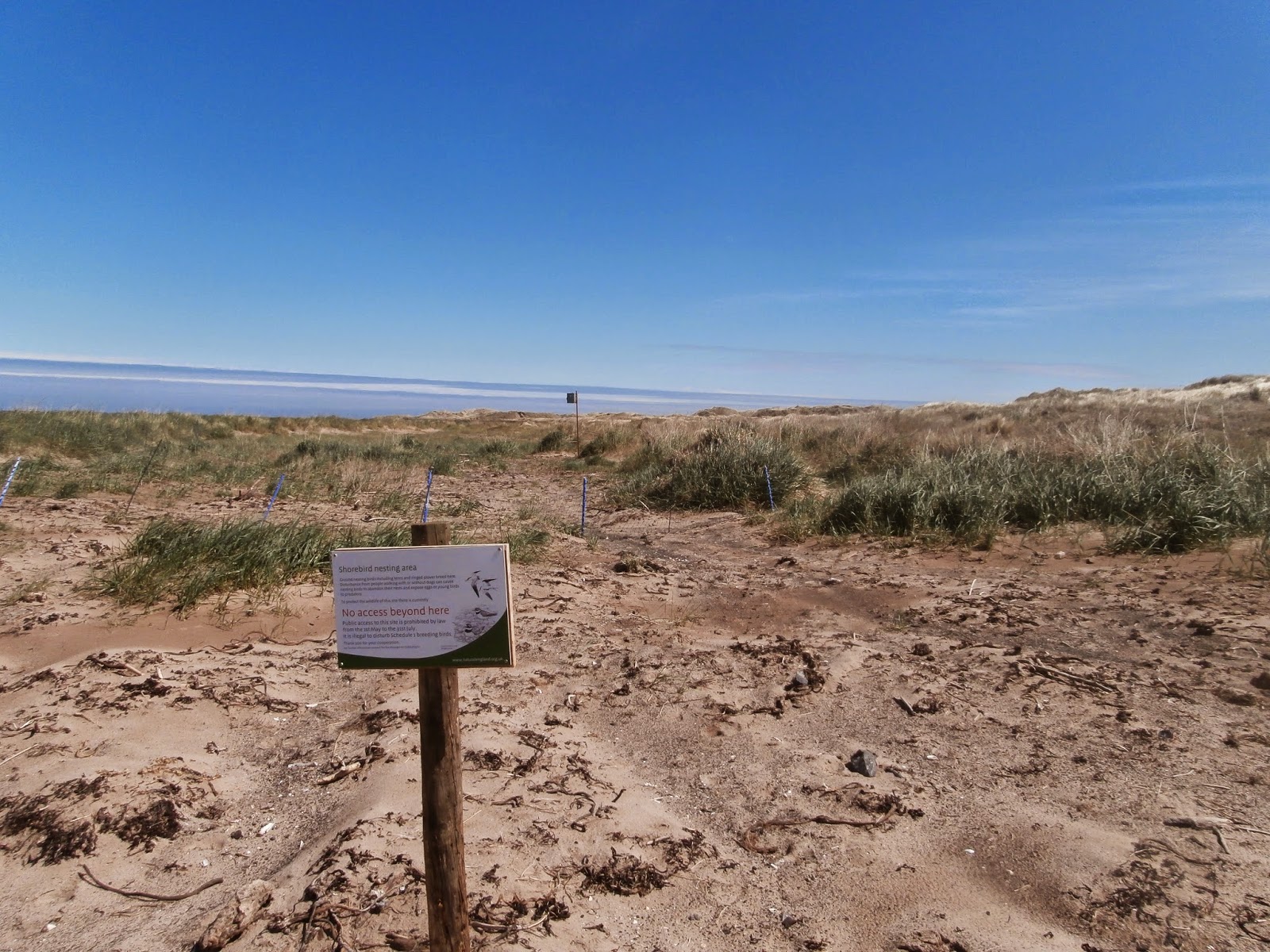
Although breeding shorebirds are anywhere on the beache, this year, potential sites were cordoned off with fencing. A variety of fencing was used to make for optimum success. Approximately 2.5km of blue exterior rope was used in addition to 1km or electric wire and 1.5km mesh netting. Electric fencing is a good defence in preventing mammalian predators such as foxes, but the blue exterior fencing has worked very well in warning beach-users from walking too close to the scrapes and disturbing the incubating birds of eggs/chicks, thus reducing the risk of nest failure due to exposure.


Wardens have been out on the beach all summer speaking to the public and monitoring shorebirds


In addition, 40 information signs as well as Shorebird leaflets were placed at access points to beaches informing the public of the summer restrictions and presence of breeding shorebirds. One of the main signs focused on asking people to keep their dogs on a lead to avoid disturbing breeding birds in both the dunes and on the beaches.

Our Shorebird leaflet available to download on the blog
Over the summer we have had a hardworking team of Shorebird Wardens and volunteers who have been both observing shorebirds and engage the public. They have been either on-site informing people about the reasons for shorebird decline or at events such as ‘Shorebird Celebration.’

We also had an engaging end of season discussion between staff and volunteers from both Lindisfarne NNR and the National Trust discussing the success of shorebirds across Northumberland.

As the season is now over, we can now say that with all of these contributions, the shorebirds breeding season has resulted in high productivity, with good numbers of Common, Arctic and Little terns and average numbers for ringed plovers.


For anyone who would be interested in joining our numbers and protecting our rare little terns & other important shorebirds next summer, please get in contact: northumberlandlittleterns@gmail.com


Fencing all cleaned off and ready to be stored for next year.

Wednesday, 20 May 2015

Champions for shorebirds on the NNR

Another shorebird update!

With the help of external funding we have a new shorebird warden who started this week. Richard has joined us for the summer season and in additional to staff and volunteers will be out and about around the NNR talking to visitors and making sure shorebirds are given the room they need to breed. He will be joined shortly by another warden, Laura, who will be taking up the gauntlet later in the month. Say hi to them if you see them out on the beach and help make their job a little easier by being aware of sensitive breeding areas whilst on the beach. Download our leaflet 'Sharing Our Beaches with Birds' for loads more info.


Sorry not a picture of the Richard the new warden - I'll get one of them out and about for the next blog!

Wednesday, 13 May 2015

Fences go up


Over the last week staff and volunteers have been putting up temporary protective fencing around the reserve. The fencing will allow shorebirds on the NNR to have a little bit of the Northumberland beach just for them without the threat of disturbance. 

Whilst out and about we had Ringed Plovers already incubating eggs. The eggs are so small and camouflaged it is easy to see how they could be trampled. 

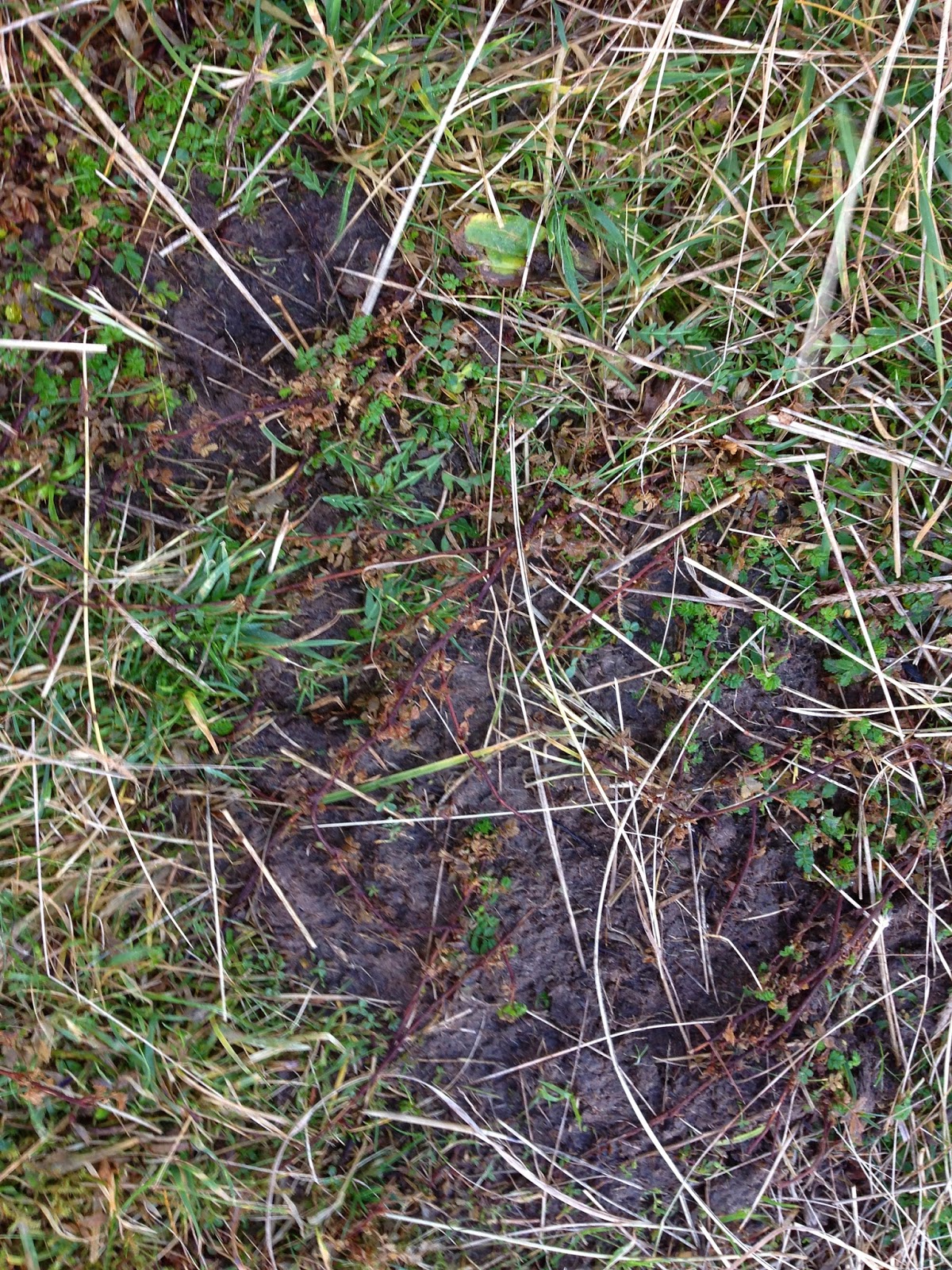
Ringed Plover footprints on the beach. If you see a lot of these in an area it could indicate activity. 

We've been putting up outer fences with blue rope and signs - please don't go past them.

Thursday, 22 May 2014

22nd May: Litle tern decoys repainted

Last year, Lowick and Holy Island First Schools did a great job of painting the little tern decoys that were placed on the North shore of Holy Island. The decoys were used to try to attract little terns to nest in areas identified as having great potential to become breeding grounds for these special birds.

Decoys in action last year

However after a few months of being outside in all weathers last year the decoys were looking a little tired, so the schoolchildren have repainted them ready for another season on the NNR.

Two spruced up little terns on the North shore this week

The Reserve team will continue to monitor these areas closely to detect interested birds and prevent disturbance. While out wardening, our team chat to visitors and inform them of how they can help to protect the sites and avoid disturbing the breeding birds.

Remember to be aware of ground nesting birds when you are walking on the NNR and shores nearby, and please observe notices and access restrictions. It is particularly important to keep dogs on a lead around breeding bird areas.

Tuesday, 15 April 2014

15th April: Special Event Tomorrow

Reserve staff and volunteers are holding a special Easter Family Craft Event tomorrow at the Window on Wild Lindisfarne. Here you can get stuck into making your own flapping lapwings, little terns and lobster door guards. The event is free!

The Window on Wild Lindisfarne

Lobster and lapwing welcoming you to our previous craft event, which was a great success

Visitors enjoying views of the birds on the scrape from inside the building

There will also be activities like Easter wordsearches, Bird Bingo and more!

Everyone is welcome to drop-in anytime between 11.00 and 13.00, please see the Events page for more information about events on the Reserve.

Friday, 11 April 2014

11th April: Little Tern Recovery Project

Every year a special type of sea bird returns to our shores making a journey of thousands of miles. There are several types of terns that make Northumberland their home in the summer taking advantage of the marine larder that is only a few flaps away.

The Little Tern

Our smallest Tern species is the Little Tern which travels each April to breed at fewer than 60 sites nationally. After navigating its way from the depths of Africa to our shores the Little Terns story is not over. It has to find its place amongst the busy beaches, which is becoming increasingly difficult with climate change and coastal development.


An example of a potential Little Tern breeding site, complete with decoys and a lure that plays Little Tern calls

It is because of the threats to their survival that a national partnership project supported by EU LIFE+ programme has been established. What does this mean for Northumberland? With strong established colonies right here on the coast we have been included within the project. Natural England, National Trust, Northumberland AONB partnership and the RSPB have formed a partnership and recruited a project worker to work between established sites and any new satellite sites where ever they may crop up. This includes the Northumberland SPA from Low Newton through to LNNR and potentially further afield. The project is running nationally for 5 years and 3 years in Northumberland.

With the first sightings of our early arriving Sandwich Tern last week, it won’t be long before the breeding season gets fully underway. Everyone can help Little Terns and shore nesting birds on the Northumberland Coast. If you are visiting Holy Island or any of our brilliant beaches over the summer, you can help by keeping dogs on leads and take note of any signs or fenced off areas where shore birds may be breeding.

This is how the shore bird sites will look once the fencing and signs are up

But wait there are more ways to help! We are currently recruiting volunteers to help survey new shore bird sites as well as wardens for established areas. Any help is appreciated whether you can give a large or small amount of your time. If you want more information or have any sightings, please get in touch on 07768310629

I hope to write regular updates for the blog and keep everyone up to date with the project as the season goes on.

Mhairi Maclauchlan
Project Co-ordinator EU LIFE+ - Little Tern Recovery Project Northumberland

Monday, 17 March 2014

17th March: A "successful unsuccessful litter pick"

Reserve staff were recently contacted by a student at Cranmer Hall Theological College, Laura, who organised a litter pick on Holy Island to help remove tidal litter that is washed up on the Reserve's shores as part of a community outreach event. 

Laura has kindly written an article for us documenting this trip and the group's motivation for doing so:

When I say the words “trainee vicar” to you, what do you think of? A balding, middle-aged man in ill-fitting black robes, stuttering and stumbling over a poorly prepared sermon while a scattered congregation of nine or ten elderly folk struggle to stay awake? A group of over-enthusiastic hopefuls shoving flyers and tracts into the faces of unsuspecting pedestrians who are trying desperately to avoid eye-contact? Or maybe just an everyman wearing a dog-collar and an L-plate?

Would the words “litter-pick” cross your mind? I don’t mean just picking a crisp packet off the pavement on your way home from church – I’m talking about sturdy walking boots, big black sacks, fancy litter-picking gadgets and a whole coastline littered with…well, litter.  Well, when a group of 5 trainee vicars from Cranmer Hall, Durham, arranged a trip to Lindisfarne to get involved in the community, this is exactly what we planned to do (along with other activities which ranged from teaching at a school to blessing animals in the market square…but those are stories for another time).

Before I tell you about our trash-filled trek, I hope you don’t mind if I explain a bit more about our motivation for doing the litter-pick.

When we first spoke to Paul Collins, the vicar of St Mary’s Church on the Holy Island of Lindisfarne, about what he’d like us to do on our community outreach weekend in March, he told us he’d like us to do something that encouraged both locals and visitors to appreciate the natural beauty of the Island.  If you’ve ever been to Lindisfarne, you’ll understand what he means. The shell-strewn shores and patchwork farmlands are framed by a vast stretch of ocean and an endless sky. The lonely sand-dunes on the north of the Island seem, at a first glance, to be a desolate wilderness, but the long grasses are the hiding-place of a variety of flora and fauna. You can hear the eerie cries of the seals from their resting places around the Island, and a symphony of bird-calls from the avian visitors. Lindisfarne is, in its own desolate and wild way, an extremely beautiful and peaceful place.

Shoreline of Lindisfarne NNR (James Durrant)

Tidal borne litter is, however, a major hazard – both to the beauty of the Island and to the wildlife who make their homes there. While the wonderful folk of Lindisfarne NNR do a fantastic job of preserving the natural state of the Island, the daily drop-off of debris from the tides of the North Sea means that keeping the beaches clean is an endless task. One of the best ways to show your appreciation of nature is to help care for it – and that’s what one pair from the Cranmer crew decided to do. So, on the 8th March 2014 at 10am, my partner-in-picking and I set off with the litter-picking gear that the NNR very kindly provided for us and went to find our team of volunteers.

Now, I’d love to tell you that we managed to build a huge network of support and had hundreds of people turning up on the day, fighting over the 6 litter-pickers and eager to save the planet.  As you may have gathered from the title of this blog, however, the turnout wasn’t exactly terrific – late advertising on our part and a high tide meant that the total number of volunteers was 2. Including us.

A happy litter picker! (James Durrant)

Unperturbed by this little setback and determined to go through with our plan, we wandered around the town in a brave attempt to build up a following of vistors who were inspired by our efforts and/or felt sorry for us. When we got to the edge of town the total number of volunteers remained at 2 (including us), so we set off for the beach near Emmanuel Head on the north shore of the Island and managed to fill almost 2 bags with plastic bags, drinks bottles, half an orange buoy, a few bags of dog waste and an assortment of unidentifiable objects.  It was only when the bags started to split and we had to use the spare ones to reinforce them that we decided to call it a day.

Now, I know that 2 bags of litter is a tiny drop in a huge ocean of trash, but I wouldn’t say the pick was entirely unsuccessful. For one, 2 bags is better than nothing! Every crisp packet you pick off the pavement is one less crisp packet on the pavement. We also had loads of fun – litter picking is hard work but it’s a great way to build up team spirit (even if it’s just a team of two people!) and you feel really satisfied afterwards. The plastic bag you took off the beach might have been a deathtrap for a curious gannet, so you’re making a lifetime of difference.

So, if you’re planning a litter-pick, go for it! It’s really easy to organise – just contact the environmental guys in the area you’re interested in as they’ll be super-keen for you to help out and give you loads of guidance. Make sure you get a group together in advance too. Then it’s just a case of turning up on the day and picking up as much litter as you can carry – but remember you have to carry it back too!  If trainee vicars from Durham can do it, then so can you!

Litter-laden at Emmanuel Head, Holy Island (James Durrant)


Monday, 10 February 2014

4th February: January peak bird counts

Some selected peak bird counts from January's co-ordinated Wetland Bird Survey. The weather for this day was poor with a rough sea but still some great numbers of birds were seen:

Pink-footed goose: 2000
Barnacle goose: 250
Light-bellied Brent goose: 1100
Greylag goose: 128
Whooper swan: 15
Wigeon: 900
Shelduck: 1318
Pintail: 230
Long-tailed duck: 20
Bar-tailed godwit: 1053
Oystercatcher: 974

Thanks to all our volunteers who give their time every month to carry out this survey across the NNR.

3rd February: Fenham-le-Moor birdwatch

Sunday 2nd February saw another successful birdwatching event from the Fenham-Le-Moor hide. Reserve warden Laura helped show visitors how special Lindisfarne NNR really is by pointing out why the mudflats are so important as a food source to wintering birds.

Great views of the grey plover, one of the Reserve's winter VIPs, were seen

Highlights include grey plover feeding close to the edge of the saltmarsh, 60 pintail and over 150 shelduck.

It was interesting to meet some local people at this drop-in event - all visitors who attended the live within 15 miles of the NNR and had visited the hide before, but had come out specifically for this birdwatch. Please do come along to our next drop-in birdwatch: Sunday 16th March at Budle Bay, 11.30am to 1.00pm. Full details are on our Events page.

Thanks to our volunteer David who came to help out and was happy for all to look through his telescope at the birds of the Flats.

31st January: Two days in the life of the Window on Wild Lindisfarne

We invite volunteers and others who work with the Reserve team to write pieces for this blog. Today we have a special blog post from one of our volunteer guides, David, giving an insight into what it is like to be a guide on Lindisfarne NNR. David explains how the Reserve, normally busy with visitors, can have quiet days too!

David tells us:

“The afternoon of Tuesday 21st January was sunny and almost still but cold. The Window on Wild Lindisfarne building was very busy both inside and out. Visitors arrived at the rate of 45 adults per hour plus children and dogs. Several couples, some with babies were staying on the Island and all the rest bar one couple were from a distance, all from further south than Newcastle. Lots of birds enjoying the flooded scrape. About 100 each of Brent geese, curlew, teal and lapwing. They were mostly on the scrape but commuted to the next door field to the west. Plus lots of gulls and starlings. Having packed up, I walked round the water's edge to the Lookout on Wild Lindisfarne (old Coastguard Tower) to discover that the Brent geese had flown over the building just as far as the shoreline in the harbour near the upturned boats.

Drake teal: Europe's smallest duck, and one of our most beautiful, can be seen from the Window on Wild Lindisfarne throughout the winter

However, on the following Monday afternoon (27th) it was all together different. Cold, wet and very windy. Like a chump I misread the tide tables and arrived early for the safe crossing but it was very interesting to watch both humans and birds during my wait of about 30 minutes! Having stopped close to the water's edge on the causeway there were lots of birds to see. Many small groups of shelduck flew over southwards at about 20 metres height. About 10 each of oystercatchers and curlew paddled about. A huge flock of small waders flew about like a murmuration of starlings but I couldn't identify them. Amazingly, there was a long straight line of Brent geese parallel to the causeway about 500 metres to the north (I set up the telescope) and every so often about 25 would take off and fly south over me, very close, at about 5 metres height. Some of the humans were impatient. By now there were 2 white vans and 4 cars waiting to drive over to the Island. One car driver set off into the water which soon covered the wheels and he very, very quickly reversed out.

Flock of oystercatcher: these striking birds can be seen from the causeway

On reaching the Window building there were only gulls on the scrape and they promptly took off and then no birds (or people) for an hour. I gave up to go home and it was really windy outside, hence the lack of people and indeed, the main car park had only 2 cars in it as I left!”

David, and our other volunteers who act as guides in the Window on Wild Lindisfarne, do a fantastic job of informing visitors about the amazing wildlife of Lindisfarne NNR. David's story shows how dedicated they are, and that even on bad weather days there is still much to see on the Reserve!

Wednesday, 8 January 2014

8th January: Cattle leave the NNR

It's time to say goodbye again to the NNR's herd of cattle until the Autumn, when they will be brought back to the Reserve to graze the rough vegetation once again. Many thanks to our helpers and volunteers who made sure the cattle were brought in safely.

Getting the corral ready to make it as easy as possible to help the cows into the trailer

They seem to know where they're going!

One group of cows successfully loaded into the trailer - only three more groups to go!

The cows have done an excellent job for another year, helping to ensure the dunes are in the best condition for this summer's plants, insects and breeding birds.

Staff and volunteers found it amazing to see the difference between when the cattle were brought onto the Reserve, in October, and now. They have done a fantastic job of grazing the long vegetation, as you can see by comparing these two photos.

October - the day the cows arrived

December - the same stretch of grassland

It's not just keeping the long grass in check that the cattle are good at, they also have an impact on the Pirri-pirri bur by trampling and chewing it.

This photo shows how the Pirri-pirri bur is reduced in vigour by being grazed and trampled by the cattle - it is dying back and turning brown.

Monday, 11 November 2013

26th and 27th October: Graham Bell's Winter Birdwatch

At the beginning of October half-term, Graham Bell, a local bird expert, delighted visitors to the Window on Wild Lindisfarne with his extensive bird knowledge and identification skills.


Graham showing visitors some amazing views of Teal, one of our wintering ducks, through the telescope

Graham's bird 'calls' are second to none, managing to surprise visitors who actually thought there were birds in the building with us!

Graham will now be volunteering regularly as a guide in the Window on Wild Lindisfarne - if you are visiting Holy Island please do make sure you visit the building as he or another member of our team may well be there to help/answer your questions.

Thursday, 3 October 2013

2nd October: Sheep arrive

We now have some VIP guests on the Reserve - 24 Swaledale sheep, part of Northumberland Wildlife Trust's 'Flexigraze' conservation grazing scheme, have arrived on Holy Island and are settling in well near Snook House.

 The first sheep leaps out of the trailer, with Jess the sheepdog looking on

Making their way toward the pen - even attempting to stop for some lunch

The sheep were very well-behaved, walking straight into the pen (with a little help from the shepherd and his dog)! As we left they seemed to be settling in very well, heading straight for the Michaelmas Daisy - one of the invasive, non-native plants they are here to graze.

Michaelmas Daisy - the leafy, bright green plants - which sheep love to graze on

Michaelmas Daisy and other plants, such as Pirri-pirri bur, are invasive non-native species. They compete with native species such as Lindisfarne NNR's beautiful orchids, so sheep and cattle perform an important role of grazing the dunes and slacks to allow these sensitive plants to flourish. Rabbits historically kept the invasive plants in check, but the rabbit population of Holy Island has crashed in recent years, so we bring in livestock instead.

Settling in

The sheep will be checked daily until they leave the Reserve next March, to ensure they have enough water and have not found a way out of their pen! The flock will be moved around the dunes to target the most extensive areas of invasive plants.

For more information about Northumberland Wildlife Trust and Flexigraze, please visit their website here.

Monday, 9 September 2013

6th September: "Fire of the North" an amazing success!

Well, what a truly fantastic event the first Fire of the North turned out to be!

The leader of the walk and talk, John Woodhurst, was delighted with the huge turnout for the walk on Wednesday, the biggest group the NNR team has led this year! In addition to Natural England's official walk on Holy Island, groups turned out at Seahouses, Bamburgh and other places along the North Northumberland Coast to view St Cuthbert's beacon being lit - local people would not be disappointed, as great views of the fire on the Inner Farne could be seen up and down the coast.

The local papers had full page spreads printed about the event and on Wednesday afternoon, John also recorded an interview with Anne Leuchars from BBC Radio Newcastle's Drivetime show - you can catch him on BBC iPlayer!

Beautiful evening with the silhouette of the Lookout on Wild Lindisfarne and Priory against the dusk sky 

John was mid-miracle when the shout was raised that the beacon was ablaze, to everyone's delight. The beacon - a large bonfire lit by David Steel, National Trust's Head Ranger of the Farne Islands NNR, and his wardens - was huge and was reflected off the side of the white lighthouse on Inner Farne, adding to the spectacle. 

Part of the group, listening intently to John's tales of Cuthbert, before the beacon was lit

The Beacon on Inner Farne, as seen from Seahouses. What an amazing view!

Everyone who attended the event was so pleased they did and absolutely loved the talk, with the amazing atmosphere on Lindisfarne NNR at dusk adding to the experience.

Thank you so much to John, whose endless enthusiasm for Cuthbert and the history of Lindisfarne keeps visitors enraptured. John is running a final St Cuthbert walk on Wednesday 11th September - details on our Events page. Please do come along to hear even more about this amazing Saint!

Special thanks also to David Steel and his National Trust team on the Farnes for the crucial lighting of the beacon and supplying the firewood.

Wednesday, 4 September 2013

4th September: Special event - now fully booked

Don’t forget, Reserve staff and volunteers are holding a spectacular new event tonight! The 'Fire of the North' is a unique joint venture between Natural England and the National Trust to celebrate the North East’s patron Saint, St Cuthbert.

St Cuthbert's Island, off Holy Island

Two National Nature Reserves (NNRs) are coming together on Wednesday September 4 to celebrate St Cuthbert, known as the “Fire of the North”, with a memorial beacon on the Inner Farne. With the Lindisfarne Gospels - dedicated to Cuthbert - currently on display in Durham, Natural England and the National Trust are celebrating their links with Northumberland’s very own Saint. Cuthbert spent much of his life on what is now Lindisfarne NNR and, as a hermit, retreated to the Farne Islands NNR.

Said Andrew Craggs, Senior Reserve Manager on Lindisfarne:
“Our volunteer warden John Woodhurst leads walks and talks for us on Cuthbert and his local links, and we like to stress Cuthbert the man and his strong attachment to the animal world and the natural environment. Chatting with John one day we came up with the idea of re-enacting the moment when monks on the Inner Farne announced the death of Cuthbert by signalling to monks on Lindisfarne.”

Sunset looking towards Holy Island - hopefully dusk tonight will be equally as stunning!

John, who is also a local historian, takes up the story:
“It seems strange “celebrating” a death but Cuthbert was probably bigger and more famous in death than life – we have only to think of the Lindisfarne Gospels and Durham Cathedral, both dedicated to Cuthbert. We missed the March date so we’re now going ahead with our event on September 4 which is another date in the calendar when Cuthbert is celebrated. It also ties in nicely with the Lindisfarne Gospels being in Durham”.
The event will see David Steel - Head Ranger on the Farne Islands - and his wardens lighting a fire on the Inner Farne on the evening of September 4. It is hoped the fire will be seen all along the North Northumbrian coast.

The Lindisfarne NNR team can announce that this event is now fully booked, however you can still look out for the beacon on the Inner Farne from all along the coast! Watch out for it between 8.30 - 9pm tonight.


Tuesday, 30 July 2013

30th July: Impressive clearance of Pirri-pirri burs

With the help of Jo and volunteer Harry, this afternoon we collected two huge bags of Pirri-pirri bur seeds from the dunes of the Reserve. This is an invasive, non-native plant from New Zealand, which grows aggressively and pushes out native plants. The seeds have spines that stick to clothing and dog fur, meaning they are easily transported. Once we started collecting the seeds by hand, they stuck together and easily rolled up into big balls!

Harry and Jo with just some of their Pirri seed balls - impressive work!

This is part of ongoing work to clear the Pirri-pirri burs from the major paths among the Reserve. This means that when visitors walk along the main paths here there is less chance of them picking up burs on their clothing, so the risk of seeds being transported to other sites nearby is reduced. It also creates less nuisance for visitors.

Showing how difficult it is to remove the seeds once they get attached to clothing!

In addition to checking your clothing, please check your dog for the spiny burs after visiting the Reserve.
If you would like to join our team of volunteers to tackle the Pirri-pirri bur and help out on the Reserve, please contact the Reserve office on 01289 381470.


Monday, 15 July 2013

9th July: Pirri-pirri bur bashing

Reserve staff and volunteers have begun the removal of Pirri-pirri bur from the sand dunes at Cocklawburn and Cheswick, part of the Site of Special Scientific Interest (SSSI) adjacent to the Reserve. We have been tackling it using garden forks and hand-pulling, which is effective at removing most of the vegetation but is very hard work!

Our volunteer warden showing how easily the burs attach themselves to your clothing!

Reserve staff have been working with Berwick Wildlife Group to map the extent of Pirri-Pirri bur at the Northern edge of the Reserve. Large patches have been found among Cheswick dunes, part of the SSSI that we have a responsibility to manage as it is next to the Lindisfarne NNR - the Reserve reaches the mean high tide mark here.

The grid reference of each patch of Pirri-pirri has been recorded in order to create a map of it's invasion. Reserve staff and volunteers will then remove the Pirri-pirri at each reference point, then next year repeat this to see how effective removal has been (hopefully very much so!). Berwick Wildlife Group have been great in organising these surveys and raising awareness about problems with Pirri-pirri in the local area.

The prickly fruiting bodies of the Pirri-pirri bur - these break down on contact, allowing the seeds to spread further

In addition to the seeds being spread by the prickly burs, the plant also spreads by stolons that grow underground - this can make it hard to remove completely. Pirri-pirri causes artificial dune stabilisation, competes with native sand dune species, invades the botanically rich areas of the dunes in dry seasons, and burs can get tangled in fledgling bird's feathers preventing them from flying.

In addition to hand-pulling the plants, Reserve staff and volunteers are collecting the seeds on the main paths among the dunes of Holy Island to prevent them being spread further into the dunes. You can help us by staying on the paths when visiting the Reserve, and by checking your shoes, clothing and dogs for the burs before leaving.