Showing posts with label Habitats. Show all posts

Friday, 6 February 2015

6th February: Scots pine regeneration

This time of year is best for spotting tiny Scots pine saplings around the Snook where, if left to grow unchecked, the sand dune habitat would slowly change to become dominated by Scots pine and scrub such as hawthorn. The rest of the dune vegetation is rank and dark brown in colour, making it easy to spot the bright green saplings, which are hand-pulled to ensure root removal.

The 'Mothership' tree, with tiny saplings to the left

Saplings

It is very important to keep the existing cover provided by Scots pine and scrub among the dunes for small birds passing through, using Lindisfarne as a valuable stop-off on migration. This is why the Reserve team only remove new regeneration and not the established tree cover.

Friday, 16 January 2015

15th January: Brent geese on farmland, Holy Island

Around 300 Dark-bellied and 50 Light-bellied Brent geese have been spotted sheltering on farmland during the recent high winds. Reserve staff spotted the birds whilst out replacing signs so took these photos, not bad for a small digital camera!


These charismatic small geese can often be spotted feeding on the mudflats from the Causeway and from the hide at Fenham-Le-Moor.

Thursday, 22 May 2014

22nd May: Litle tern decoys repainted

Last year, Lowick and Holy Island First Schools did a great job of painting the little tern decoys that were placed on the North shore of Holy Island. The decoys were used to try to attract little terns to nest in areas identified as having great potential to become breeding grounds for these special birds.

Decoys in action last year

However after a few months of being outside in all weathers last year the decoys were looking a little tired, so the schoolchildren have repainted them ready for another season on the NNR.

Two spruced up little terns on the North shore this week

The Reserve team will continue to monitor these areas closely to detect interested birds and prevent disturbance. While out wardening, our team chat to visitors and inform them of how they can help to protect the sites and avoid disturbing the breeding birds.

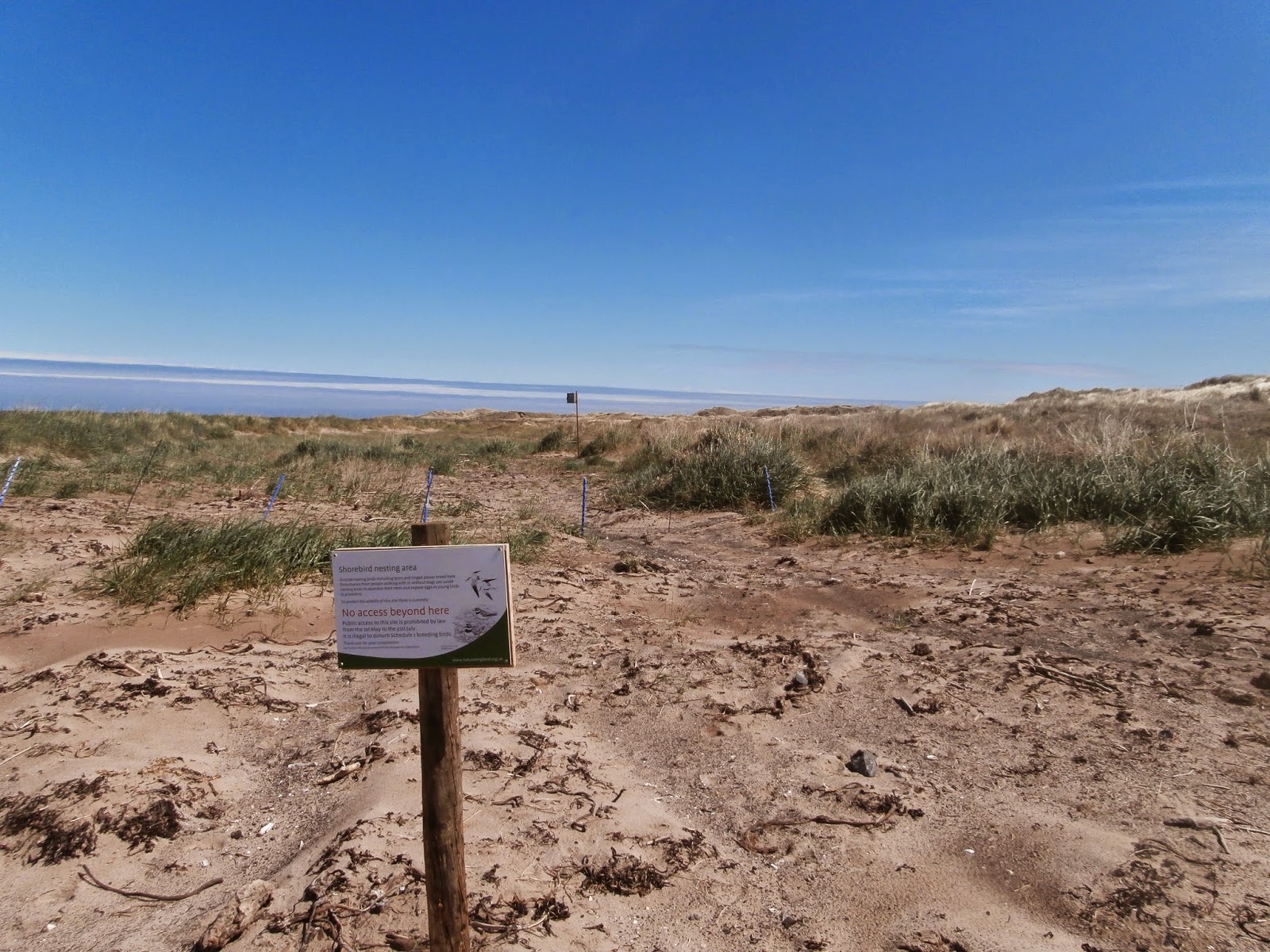
Remember to be aware of ground nesting birds when you are walking on the NNR and shores nearby, and please observe notices and access restrictions. It is particularly important to keep dogs on a lead around breeding bird areas.

Tuesday, 22 April 2014

22nd April: Bird Calls - Sounds of the dunes

Now is a great time to take a walk among the dunes of Lindisfarne NNR. As you do, you may be followed by the amazing song of the skylark which is displaying breeding behaviour now.

Skylark

Please click the following link to hear the song:
Skylark's song


Another bird that you cannot miss among the dunes is the ubiquitous meadow pipit, which nests among the marram grass.

Meadow pipit

It is very important to stay to main paths through the dunes to avoid trampling the meadow pipit's nests and young chicks, and to keep your dog on a lead or at heel.

Click this link to hear the song of the meadow pipit:
Meadow pipit

All recordings are from www.xeno-canto.org

Friday, 11 April 2014

11th April: Little Tern Recovery Project

Every year a special type of sea bird returns to our shores making a journey of thousands of miles. There are several types of terns that make Northumberland their home in the summer taking advantage of the marine larder that is only a few flaps away.

The Little Tern

Our smallest Tern species is the Little Tern which travels each April to breed at fewer than 60 sites nationally. After navigating its way from the depths of Africa to our shores the Little Terns story is not over. It has to find its place amongst the busy beaches, which is becoming increasingly difficult with climate change and coastal development.


An example of a potential Little Tern breeding site, complete with decoys and a lure that plays Little Tern calls

It is because of the threats to their survival that a national partnership project supported by EU LIFE+ programme has been established. What does this mean for Northumberland? With strong established colonies right here on the coast we have been included within the project. Natural England, National Trust, Northumberland AONB partnership and the RSPB have formed a partnership and recruited a project worker to work between established sites and any new satellite sites where ever they may crop up. This includes the Northumberland SPA from Low Newton through to LNNR and potentially further afield. The project is running nationally for 5 years and 3 years in Northumberland.

With the first sightings of our early arriving Sandwich Tern last week, it won’t be long before the breeding season gets fully underway. Everyone can help Little Terns and shore nesting birds on the Northumberland Coast. If you are visiting Holy Island or any of our brilliant beaches over the summer, you can help by keeping dogs on leads and take note of any signs or fenced off areas where shore birds may be breeding.

This is how the shore bird sites will look once the fencing and signs are up

But wait there are more ways to help! We are currently recruiting volunteers to help survey new shore bird sites as well as wardens for established areas. Any help is appreciated whether you can give a large or small amount of your time. If you want more information or have any sightings, please get in touch on 07768310629

I hope to write regular updates for the blog and keep everyone up to date with the project as the season goes on.

Mhairi Maclauchlan
Project Co-ordinator EU LIFE+ - Little Tern Recovery Project Northumberland

Wednesday, 26 March 2014

25th March: Updating our Nature Trail

We recently received new posts for the Lindisfarne NNR Nature Trail to replace the temporary posts that are there now.

The new posts are larger so are easier to spot and have beautiful carvings of the iconic wildlife you can see along the trail, such as grey seal, light-bellied brent goose and eider duck. We are looking to install these by Easter.

We have also updated our leaflets to accompany the new posts - these are out in the leaflet dispensers on the Reserve now, so please pick one up from the car parks, Window on Wild Lindisfarne, or Budle Bay next time you visit.


Monday, 17 March 2014

17th March: Brackenside Cows on Holy Island

We have another 'guest' writer for the blog: John, the farmer of Brackenside Farm, a few miles from Lindisfarne NNR and the farm which is home to the cattle we borrow each winter, has written a great post about this partnership and offers a unique insight into looking after the herd whilst they are on the Reserve:

So farmers are always moaning

BUT

If you keep your eyes open at Lindisfarne NNR, in the duneland of Holy Island in the late autumn you might just catch a glimpse of a pair of happy ones when they are checking their cows among the dunes, slacks, quarries and old kilns. Now it could be that you hit a bad day, maybe their beasts are hard to find, possibly one or two missing, a sick cow that must be taken off the island for treatment or maybe they’ve skipped down onto the beach, feasted on sea rocket, had a wander round by the Snook, even paid a visit to the school yard. Then you will get the real thing - moaning farmers. Mostly, though, the release from the daily routine of feeding and bedding, the change from seeing a few old hens scratching round in the yard to godwits and red shanks prising out their living on the shoreline will put a smile on the farmers’ faces. Savour the moment.

The cows are a diverse bunch. The little red with white and roans are all bred on the edge of the Solway by putting a Hereford bull with dairy shorthorn cows. The black with the white heads are out of Friesian cows, again with a Hereford bull. There are also few Simmental crosses. They are there to do a job to improve the biodiversity by grazing off the rough grasses, bovine lawnmowers shortening and opening the sward to let the stunning variety of orchids find enough space and light to thrive in the new growing season. They love their work – a return to their genetic roots roaming the savanna - a bovine overseas adventure holiday.

But it can’t last for ever. Come the new year, their job done the cows return back home to be housed at Brackenside Farm a few miles inland. The farmers go back to being grumbly old men feeding, bedding and mucking out. Calving starts in the middle of March and once the youngsters are on their feet, spring is in the air and the scent of fresh grass fills the pastures then the cows can enjoy the outdoor life once more. Happy cows, happy farmers once more.

WARNING – We are talking about North Northumberland here. Concepts such as spring being in the air, grass filling pastures and smiling farmers are not to be relied upon.
John Barber


Monday, 10 February 2014

3rd February: Fenham-le-Moor birdwatch

Sunday 2nd February saw another successful birdwatching event from the Fenham-Le-Moor hide. Reserve warden Laura helped show visitors how special Lindisfarne NNR really is by pointing out why the mudflats are so important as a food source to wintering birds.

Great views of the grey plover, one of the Reserve's winter VIPs, were seen

Highlights include grey plover feeding close to the edge of the saltmarsh, 60 pintail and over 150 shelduck.

It was interesting to meet some local people at this drop-in event - all visitors who attended the live within 15 miles of the NNR and had visited the hide before, but had come out specifically for this birdwatch. Please do come along to our next drop-in birdwatch: Sunday 16th March at Budle Bay, 11.30am to 1.00pm. Full details are on our Events page.

Thanks to our volunteer David who came to help out and was happy for all to look through his telescope at the birds of the Flats.

Wednesday, 8 January 2014

8th January: Cattle leave the NNR

It's time to say goodbye again to the NNR's herd of cattle until the Autumn, when they will be brought back to the Reserve to graze the rough vegetation once again. Many thanks to our helpers and volunteers who made sure the cattle were brought in safely.

Getting the corral ready to make it as easy as possible to help the cows into the trailer

They seem to know where they're going!

One group of cows successfully loaded into the trailer - only three more groups to go!

The cows have done an excellent job for another year, helping to ensure the dunes are in the best condition for this summer's plants, insects and breeding birds.

Staff and volunteers found it amazing to see the difference between when the cattle were brought onto the Reserve, in October, and now. They have done a fantastic job of grazing the long vegetation, as you can see by comparing these two photos.

October - the day the cows arrived

December - the same stretch of grassland

It's not just keeping the long grass in check that the cattle are good at, they also have an impact on the Pirri-pirri bur by trampling and chewing it.

This photo shows how the Pirri-pirri bur is reduced in vigour by being grazed and trampled by the cattle - it is dying back and turning brown.

Tuesday, 12 November 2013

7th November: Grazing already making a big impact

Our sheep have been moved once more, and now you can really see the result of their grazing over just a couple of weeks!


 Their new pen - compare how long the vegetation is...

...with the previously grazed area - the sheep are great at grazing the grass so it is very short. They are intensively grazing a small area to target Michaelmas Daisy.


In comparison with the sheep, the cattle are grazing a larger area but less intensively

The cattle produce a really varied sward height, perfect for insects and birds come the breeding season

One of our cows doing what they do best

Thursday, 3 October 2013

2nd October: Sheep arrive

We now have some VIP guests on the Reserve - 24 Swaledale sheep, part of Northumberland Wildlife Trust's 'Flexigraze' conservation grazing scheme, have arrived on Holy Island and are settling in well near Snook House.

 The first sheep leaps out of the trailer, with Jess the sheepdog looking on

Making their way toward the pen - even attempting to stop for some lunch

The sheep were very well-behaved, walking straight into the pen (with a little help from the shepherd and his dog)! As we left they seemed to be settling in very well, heading straight for the Michaelmas Daisy - one of the invasive, non-native plants they are here to graze.

Michaelmas Daisy - the leafy, bright green plants - which sheep love to graze on

Michaelmas Daisy and other plants, such as Pirri-pirri bur, are invasive non-native species. They compete with native species such as Lindisfarne NNR's beautiful orchids, so sheep and cattle perform an important role of grazing the dunes and slacks to allow these sensitive plants to flourish. Rabbits historically kept the invasive plants in check, but the rabbit population of Holy Island has crashed in recent years, so we bring in livestock instead.

Settling in

The sheep will be checked daily until they leave the Reserve next March, to ensure they have enough water and have not found a way out of their pen! The flock will be moved around the dunes to target the most extensive areas of invasive plants.

For more information about Northumberland Wildlife Trust and Flexigraze, please visit their website here.

Thursday, 22 August 2013

22nd August: Late summer blooms

The special orchids of Lindisfarne are now setting seed, but there is still an amazing array of fascinating plants and flowers in bloom to be seen among the dunes.

Here are just some of the beautiful plants you can still see:

The beautiful white flowers of the Grass of Parnassus - this is not actually a true grass. Also known as 'bog star', this plant flourishes in damp conditions; the wet dune slacks of Holy Island is perfect habitat.

The tiny, bright pink flowers of the Seaside Centaury deserve a much closer look. It can be confused with Common Centaury, but the leaves of the two species are completely different - Seaside Centaury has much more narrow, strap-like leaves. 

This little plant is Eyebright - this species has many tiny flowers, and is abundant among the dunes right now. It grows in various habitats, being semi-parasitic and feeding off the roots of grasses. You can see it next to paths so watch out for it when walking through the dunes of Holy Island.

In addition to some fantastic plants, there are many more interesting sights among the dunes, for example this empty pupa case of a burnet moth, with part of the caterpillar still attached:


Wednesday, 24 July 2013

23rd July - Butterflies and Botany on Lindisfarne NNR

Summer has well and truly kicked in and the amazingly diverse plant species on Lindisfarne NNR are blooming, much to the delight of the Island's abundant butterflies and moths (and visitors!).

Butterflies are making the most of the floral spectacle - the Reserve's fantastic Dark Green Fritillaries can be seen among the dunes now, along with lots of Common Blue, Small Heath, Green-veined White, and good numbers of Ringlet. Graylings have also been seen recently, you will be lucky to spot one of these well-camouflaged butterflies.

The Dark Green Fritillary - Lindisfarne NNR is one of the best places in Northumberland to see this butterfly


Ringlet butterfly

The Reserve is a fantastic place for budding botanists to learn about coastal and duneland plant species, and for the more experienced there are plenty of beautiful species to see - the Reserve is one of the most important sites in the region for several orchid species, many of which can be seen in bloom now.

One of our most beautiful orchids is the Marsh Helleborine, flowering in their thousands during July. This species grows abundantly in the damp dune slacks and lower-lying areas of the dunes.


Many Marsh Helleborines in flower among the dunes


One beautiful Marsh Helleborine


Two 6-spot Burnet moths on Pyramidal orchids (with some Pirri-pirri bur in the background). Pyramidal orchids grow in many shades of pink, and occasionally white variants can occur.


Orchids may be our 'star' attractions, but other duneland plants are just as beautiful. This is the Seaside Centaury in bloom on the duneland of the Reserve - this species is rare in this county and is abundant on Lindisfarne this year. Its flowers can be seen from July - August.

It is important that we preserve the habitat for all these fantastic flowers - one way we are doing this is by controlling the spread of Pirri-pirri bur which competes with the native plants. Please keep dogs on short lead or at heel when visiting the Reserve, this will prevent flowers being trampled and also stop Pirri-pirri bur seeds being spread.

Thursday, 16 May 2013

13th May - Rocky shore exploration


This morning was spent looking at the rocky shore on the island where some very interesting and beautiful creatures were found. Catherine, a very knowledgeable Natural England marine ecologist acting as a lead advisor kindly explained more about the sealife found here, as she carried out a survey, and took some great photographs.

Lindisfarne's rocky shore - beautiful day!

Butterfish in one pool

Sea slug

The diversity of life in each tiny rock pool is amazing to see, we counted over 30 species attached to just one tiny rock!

It was great fun to discover the more unusual creatures of the Reserve that are seldom seen, but we were careful not to disturb them or their habitats. Any rocks that were looked at were carefully placed back in their original  position so that the animals and plants underneath were not damaged or killed by exposure to the drying sun, wind and tide.

Thursday, 24 January 2013

24th Jan: Sand dunes - a fragile habitat

Lindisfarne NNR contains 243 hectares of sand dunes on Holy Island. Dunes are formed when wind-blown sand starts to gather and builds up to create a mound. This is then stabilised by Marram grass, its long roots spreading into the sand. Then more plants colonise the dunes and eventually they become fixed features. The plants of the dunes include rare and unique species of importance, which support butterfly and moth species including the Dark Green Fritillary (pictured below). The young and forming dunes – embryo dunes – are particularly fragile and vulnerable to erosion.


There are a number of embryo dunes on the foreshore at Goswick, adjacent to the NNR. Sadly, these have recently been damaged by tyre tracks from motor bike scrambling. Scrambling also affects the older, more stabilised dunes by removing plant cover, which exposes sand that can then blow away. The dunes are also important breeding sites for Skylarks and Meadow Pipits that nest amongst the grass in spring.
Recent damage to the dunes at Goswick

Due to man’s influence on the landscape over time, many sand dunes have been destroyed in the United Kingdom. This is why it is so important that we protect our remaining dunes, part of our natural heritage, for future generations and one of the key reasons behind Lindisfarne’s legal designation as a SSSI (Site of Special Scientific Interest).

Off-road driving is not permitted anywhere on the Reserve under any circumstances and we have contacted the Police regarding this recent incident at Goswick. They are looking into the matter seriously and local residents are keeping watch on the area. If you see anything suspicious, please ring the Reserve office on 01289 381470.


We have been processing January's WeBS count data (see previous post) and have some high counts of note: 51 Red-throated Divers (the highest count at Lindisfarne since the 1990s), 67 Long-tailed Ducks and 41 Red-breasted Mergansers.

Male and female Red-breasted Mergansers (John Dunn)