Showing posts with label Livestock. Show all posts

Monday, 17 March 2014

17th March: Brackenside Cows on Holy Island

We have another 'guest' writer for the blog: John, the farmer of Brackenside Farm, a few miles from Lindisfarne NNR and the farm which is home to the cattle we borrow each winter, has written a great post about this partnership and offers a unique insight into looking after the herd whilst they are on the Reserve:

So farmers are always moaning

BUT

If you keep your eyes open at Lindisfarne NNR, in the duneland of Holy Island in the late autumn you might just catch a glimpse of a pair of happy ones when they are checking their cows among the dunes, slacks, quarries and old kilns. Now it could be that you hit a bad day, maybe their beasts are hard to find, possibly one or two missing, a sick cow that must be taken off the island for treatment or maybe they’ve skipped down onto the beach, feasted on sea rocket, had a wander round by the Snook, even paid a visit to the school yard. Then you will get the real thing - moaning farmers. Mostly, though, the release from the daily routine of feeding and bedding, the change from seeing a few old hens scratching round in the yard to godwits and red shanks prising out their living on the shoreline will put a smile on the farmers’ faces. Savour the moment.

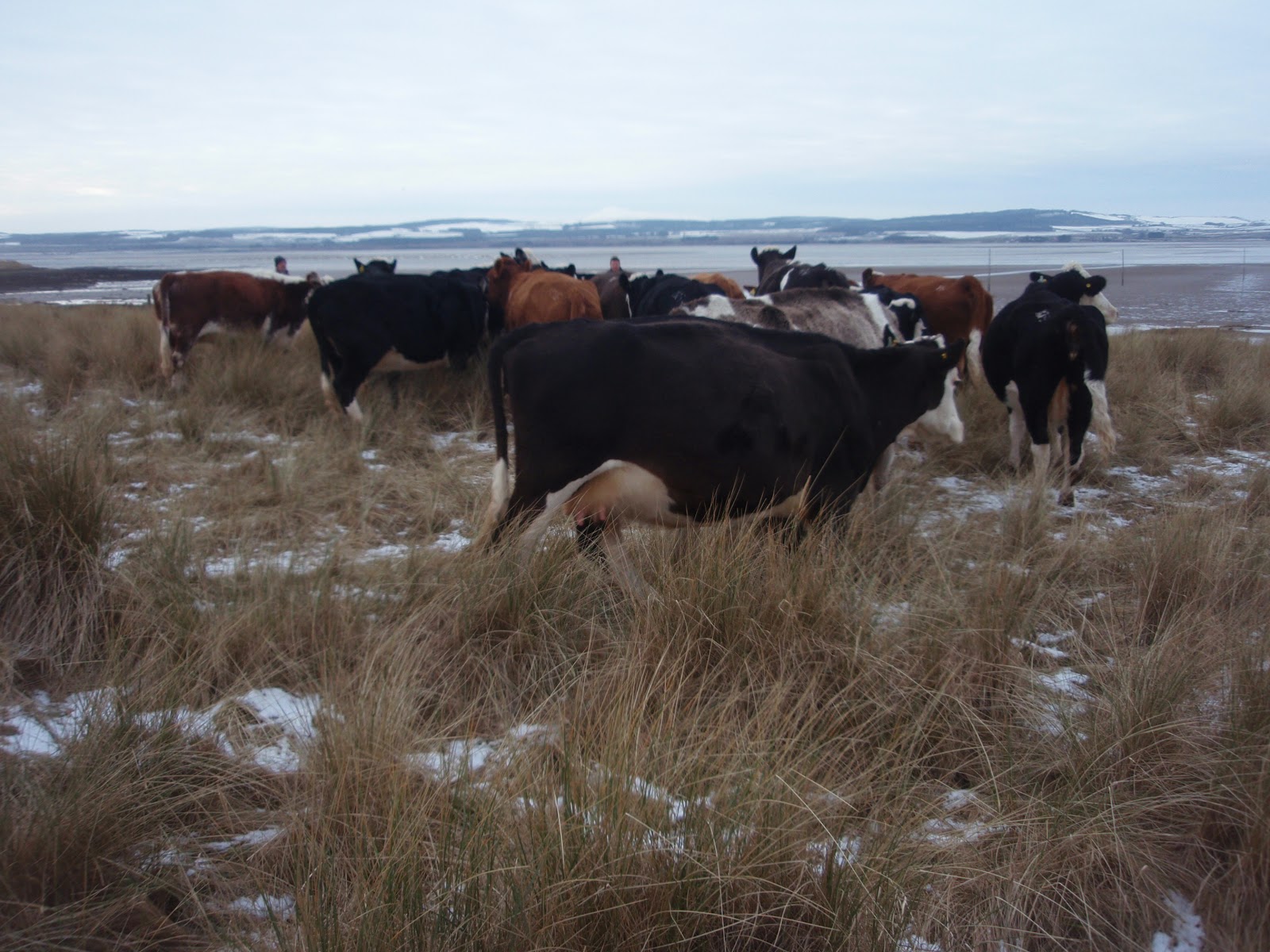
The cows are a diverse bunch. The little red with white and roans are all bred on the edge of the Solway by putting a Hereford bull with dairy shorthorn cows. The black with the white heads are out of Friesian cows, again with a Hereford bull. There are also few Simmental crosses. They are there to do a job to improve the biodiversity by grazing off the rough grasses, bovine lawnmowers shortening and opening the sward to let the stunning variety of orchids find enough space and light to thrive in the new growing season. They love their work – a return to their genetic roots roaming the savanna - a bovine overseas adventure holiday.

But it can’t last for ever. Come the new year, their job done the cows return back home to be housed at Brackenside Farm a few miles inland. The farmers go back to being grumbly old men feeding, bedding and mucking out. Calving starts in the middle of March and once the youngsters are on their feet, spring is in the air and the scent of fresh grass fills the pastures then the cows can enjoy the outdoor life once more. Happy cows, happy farmers once more.

WARNING – We are talking about North Northumberland here. Concepts such as spring being in the air, grass filling pastures and smiling farmers are not to be relied upon.
John Barber


Wednesday, 8 January 2014

8th January: Cattle leave the NNR

It's time to say goodbye again to the NNR's herd of cattle until the Autumn, when they will be brought back to the Reserve to graze the rough vegetation once again. Many thanks to our helpers and volunteers who made sure the cattle were brought in safely.

Getting the corral ready to make it as easy as possible to help the cows into the trailer

They seem to know where they're going!

One group of cows successfully loaded into the trailer - only three more groups to go!

The cows have done an excellent job for another year, helping to ensure the dunes are in the best condition for this summer's plants, insects and breeding birds.

Staff and volunteers found it amazing to see the difference between when the cattle were brought onto the Reserve, in October, and now. They have done a fantastic job of grazing the long vegetation, as you can see by comparing these two photos.

October - the day the cows arrived

December - the same stretch of grassland

It's not just keeping the long grass in check that the cattle are good at, they also have an impact on the Pirri-pirri bur by trampling and chewing it.

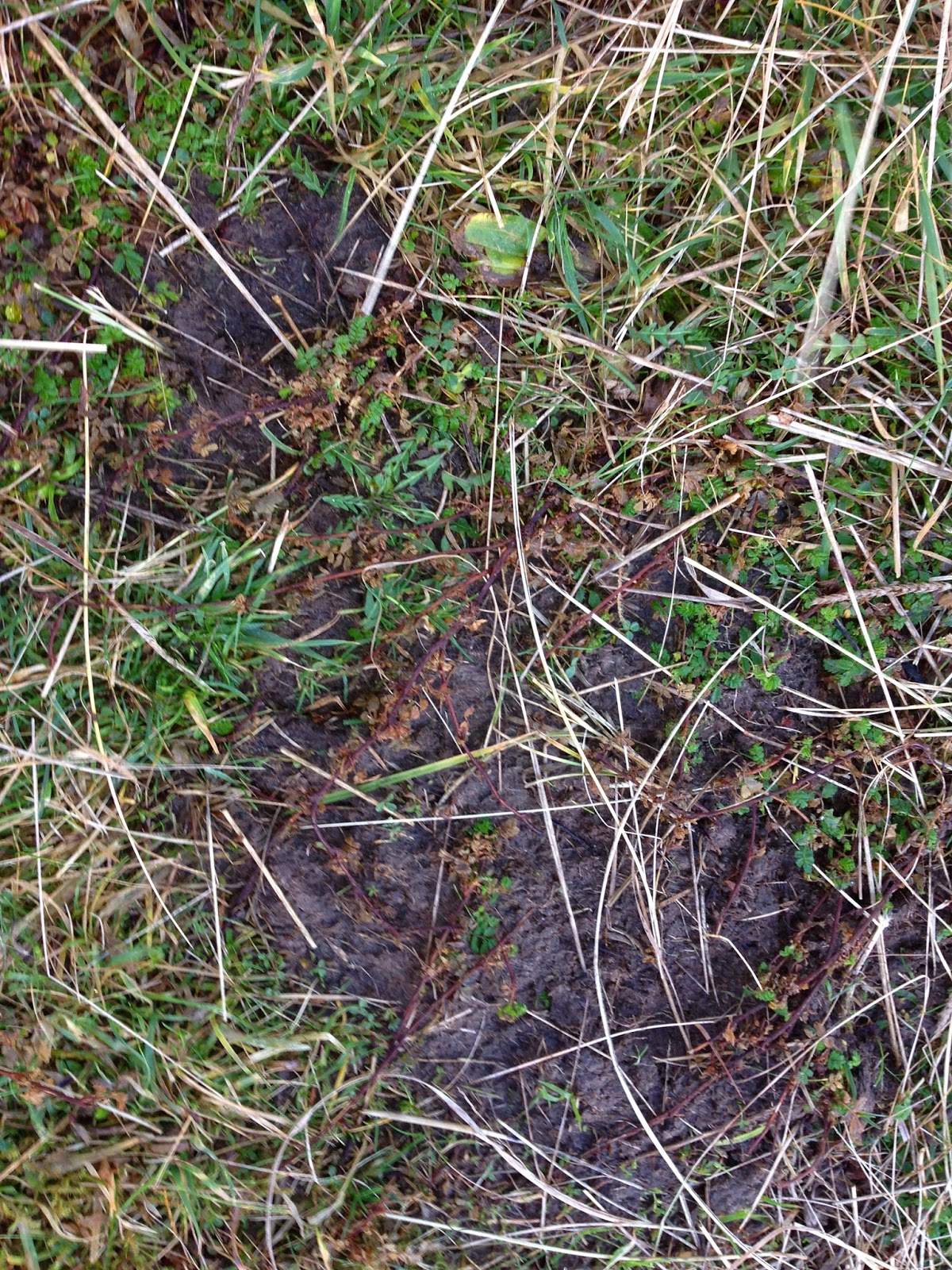
This photo shows how the Pirri-pirri bur is reduced in vigour by being grazed and trampled by the cattle - it is dying back and turning brown.

Tuesday, 19 November 2013

19th November: Winter Is Here

Winter has arrived on Lindisfarne! The Reserve had its first snowfall this morning.

Today began with a search for the cattle among the dunes, in the middle of a hail storm! Thankfully this was followed by blinding sunshine - just going to show how the Reserve can experience all weathers in one day.


A heavy snow and hail shower arrives in the dunes


Lindisfarne NNR's first snowfall of this winter, with a storm cloud in the background

Reserve staff will continue to check our livestock daily, and if we experience prolonged bad weather the stock will be returned to their homes on the mainland for the winter.

Tuesday, 12 November 2013

7th November: Grazing already making a big impact

Our sheep have been moved once more, and now you can really see the result of their grazing over just a couple of weeks!


 Their new pen - compare how long the vegetation is...

...with the previously grazed area - the sheep are great at grazing the grass so it is very short. They are intensively grazing a small area to target Michaelmas Daisy.


In comparison with the sheep, the cattle are grazing a larger area but less intensively

The cattle produce a really varied sward height, perfect for insects and birds come the breeding season

One of our cows doing what they do best

Monday, 14 October 2013

8th October: Cattle on the Reserve

Part of the Reserve is now home to thirty cattle, who are settling in nicely! If you are out and about on Holy Island now you may spot this herd roaming through the dunes.


Two of the newly-arrived cows, looking out onto their new home

As the cows are able to roam freely among the dunes of the Reserve, including the main paths, signs have been installed to warn visitors and we remind you of the importance of keeping dogs on a short lead and under strict control when walking through the areas where livestock are present.

Like the sheep, the cattle play a very important role in keeping the vegetation of Holy Island in the best condition for growth of the Island's unique flora. They also help to remove invasive non-native plants.

Thursday, 3 October 2013

2nd October: Sheep arrive

We now have some VIP guests on the Reserve - 24 Swaledale sheep, part of Northumberland Wildlife Trust's 'Flexigraze' conservation grazing scheme, have arrived on Holy Island and are settling in well near Snook House.

 The first sheep leaps out of the trailer, with Jess the sheepdog looking on

Making their way toward the pen - even attempting to stop for some lunch

The sheep were very well-behaved, walking straight into the pen (with a little help from the shepherd and his dog)! As we left they seemed to be settling in very well, heading straight for the Michaelmas Daisy - one of the invasive, non-native plants they are here to graze.

Michaelmas Daisy - the leafy, bright green plants - which sheep love to graze on

Michaelmas Daisy and other plants, such as Pirri-pirri bur, are invasive non-native species. They compete with native species such as Lindisfarne NNR's beautiful orchids, so sheep and cattle perform an important role of grazing the dunes and slacks to allow these sensitive plants to flourish. Rabbits historically kept the invasive plants in check, but the rabbit population of Holy Island has crashed in recent years, so we bring in livestock instead.

Settling in

The sheep will be checked daily until they leave the Reserve next March, to ensure they have enough water and have not found a way out of their pen! The flock will be moved around the dunes to target the most extensive areas of invasive plants.

For more information about Northumberland Wildlife Trust and Flexigraze, please visit their website here.

Tuesday, 22 January 2013

22nd Jan: Coldness continues


Since our last post the snowy conditions at Lindisfarne have continued. We have been out and about on the Reserve monitoring birds and there has been a definite decrease of species on site. The numbers of Light-bellied Brent Geese present, for example, have decreased. In partnership with our friends in Denmark, we monitor the entire population of the East Atlantic race of Light-bellied Brent Geese, which is made up of around 7,000 birds.

Light-bellied Brent Geese at Lindisfarne (John Dunn)

It is extremely important not to disturb birds in this severe weather as it is vital that they conserve energy. Walking too close to the tidal areas where ducks, geese and waders feed causes them to take flight, which wastes their energy and causes stress, preventing them from feeding, which can be fatal. In these severe conditions feeding is important to give them the energy to stay warm and not lose weight. It is a struggle to feed when the land is covered in snow and the cold causes die-back of the Eelgrass that the ducks and geese feed on. Please be careful not to cause disturbance when walking on the Reserve and keep dogs on leads to prevent them from going too close to birds. It is also important not to approach birds for photographs. One of the main reasons why Lindisfarne has been designated a National Nature Reserve is to protect its birds, and in this weather their protection is vital.

Snow on the Causeway, Holy Island

An advantage to the frost is that it causes dieback of Pirri-Pirri (the invasive plant species mentioned in previous posts). When Pirri-Pirri gets frost damaged, it breaks apart more easily when livestock trample it, helping to reduce its abundance.

The sheep did a good job of targeting the invasive Michealmass Daisy as well as Pirri-Pirri, both of the island’s non-native species. Creeping Willow is a native species but can become a scrub issue if not controlled, and the sheep also did a good job at grazing it. Through enclosing them within an electric fence, they grazed intensively. The fence-line, enclosing about an acre, was moved around to target the most appropriate areas of the dunes. Because Michealmass Daisy is less widespread than Pirri Pirri, this method had a more significant impact. The below photograph, shows the difference the sheep made to the vegetation compared to the un-grazed on the left.

As well as being able to carefully target specific areas, electric fencing is portable and has minimal impact. The cattle require stronger fencing, but Natural England has chosen the least visually-impinging option possible. When taking the cattle off last week, we brought hurdles onto the island and then took them off – this takes time but is an alternative to a permanent corral, which would detract from the natural landscape of the dunes. We also try to keep signage to a minimum for the same reason.

With this season’s grazing complete, we look forward to May when the dunes are awash with flowering orchids. The blog will be updated with wildflower photos throughout the spring and summer so keep an eye out.

Thursday, 17 January 2013

17th Jan: Cows go home

It seems the period of mild weather is over, with temperatures falling below freezing this week and a fall of snow on the east coast.
Looking more like winter on Holy Island

The snow fell thickest around Goswick

Thanks to the favourable conditions, the cattle have done a great job of trampling Pirri-Pirri and grazing the vegetation (which, in the absence of rabbits, is a valuable part of managing the site) and their work for this season is now done. They were taken off this morning as the weather looks set to worsen over the weekend and into next week. They are going back to John Barber's farm inland where they will calf in March.
The dunes on Holy Island

Rounding up the cattle

Local farmer John Barber with his cows

Three Stooges look on

The Barnacle Geese are still on the Reserve, 140 have been feeding amongst Greylag Geese in the fields near Budle Bay where there is less snow. Earlier in the week we conducted a Whooper Swan count, recording 42 on the Reserve. In the tidal areas there are good numbers of Shelduck, with over 1000 counted across the Reserve on Sunday's WeBS count (the Wetland Bird Survey conducted throughout the UK every month - more information on the BTO web-site). The hide at Fenham-Le-Moor is a good place to go to view them, where they stand out against the dark mud, their red bills and chestnut breast-belts catching the winter sun.
Female Shelduck (John Dunn)

Monday, 7 January 2013

7th Jan: Reserve news update

Like most of the UK, the end of December was very wet at Lindisfarne. As a result, there is an usually large amount of standing water on Holy Island. Conveniently, the standing water in the dunes provides natural drinking areas for the cattle. The very mild conditions have enabled the cattle to remain on Holy Island into the new year, in previous years they have been taken back to the mainland in December due to harsh conditions. They continue to graze the vegetation and will remain on the island until around the end of January if the mild conditions continue.

Peak bird counts from December included 21 Red-throated Divers, 3100 Light-bellied Brent Geese, 1350 Shelduck, 2500 Wigeon, 310 Pintail, 350 Common Scoters, 1100 Oystercatchers, 819 Lapwings, 2000 Bar-tailed Godwits, 450 Redshanks and 620 Curlews.

January is a great time for winter walks at Lindisfarne. The Reserve is a great place to come to watch birds and there are fantastic photography opportunities, please be mindful of the codes of conduct (see link). Please do not go too close to birds or seals to prevent disturbance, and stick to paths and existing desire lines to prevent impact to wildlife and their habitats. The hides on the Reserve are the best places to watch birds from, these are at The Lough and Fenham-le-Moor (see leaflet).
Mass flight of Wigeon (John Dunn)

Lapwing (John Dunn)

There is great variety to the work we do at Lindisfarne NNR. Before Christmas, Holy Island resident Alison Brigham rang the office to say she had found an injured Kestrel on her farm. The female Kestrel was dazed and had been attacked by a Sparrowhawk, it may have flown into the overhead power cables. We took it to the Berwick Swan Trust who brought it back to health. Over the years, the Berwick Swan Trust have been very helpful by taking in injured birds found on the Reserve. Jim from Berwick Swan Trust brought the Kestrel back to Lindisfarne on Friday and Alison then released it where she had first found it.


All wild birds are protected by law and it is illegal to kill, harm, exploit or hold a bird in captivity. The law aims to protect wild birds, but not to discourage the public from helping birds in need. However, when handling injured birds, great care should be taken that no harm is caused. Do not handle a wild bird unless it is essential to help it, and only do so if you are experienced and confident.

Wednesday, 12 December 2012

12th Dec: Grazing on Holy Island

Today the grazing sheep were taken off Holy Island. Since the end of summer there have been up to 22 sheep at the Snook as part of the Reserve vegetation management regime. Sheep are put on the sand dunes to graze the grass after the plants have flowered and gone to seed. Keeping the grass short enables orchids to flourish in the spring, including the Lindisfarne Helleborine, which is found only on Holy Island. The sheep have been particularly good at targeting Michaelmas Daisy, a horticultural escape.

The sheep are borrowed from Stephen Comber for about three months of the year as part of the Flexigraze scheme. Flexigraze is a not-for-profit business specialising in conservation grazing on important grasslands in Northeast England. See the Flexigraze blog for more information.

The sheep are enclosed by an electric fence-line, which is moved to target specific areas. The electric fence is usually very effective, but occasionally some of the sheep managed to escape - led on by a particular individual, Shaggy, who seemed to be a bad influence!


After rounding them up with a sheepdog, they were brought back on to the mainland and any Pirri-Pirri burs were removed from their fleeces to prevent it spreading. Pirri-Pirri is an invasive alien species originating from New Zealand, unfortunately it is abundant amongst the dunes on Holy Island and getting rid of it is a challenge. When visiting, please check your clothing and dogs for burs and remove them before you leave in order to prevent it from spreading.

Pirri-Pirri bur

There are also 20 cattle currently grazing on the dunes. As well as grass, they feed on Pirri-Pirri and are making a small impact. The cattle were brought to the island at the start of October and will be taken off early next year. They belong to a local farmer inland who we have worked with since the project began five years ago, 20-40 cattle are used depending on the requirements.


Cows of a placid temperament are chosen, females in-calf. But please respect them and keep dogs on leads. Keeping your dog on a lead also reduces disturbance to birds on the Reserve.

One of the plants that benefit from grazing is the beautiful Grass-of-Parnassus, also known as the 'bog star'. It flowers from July to September. In the above photograph, the Grass-of-Parnassus is surrounded by the invasive Michaelmas Daisy.


Today we also held a birdwatching drop-in event at Budle Bay, the southern part of the Reserve. Budle Bay is a perfect place to watch ducks and waders feeding on the saltmarsh in winter. Close views are possible as the birds have grown accustomed to the traffic noise and so have a higher disturbance tolerance (however, please do not walk on to the marsh as this will disturb them and it is also dangerous). About an hour before high tide is the best time as the birds are pushed towards the shore by the incoming water.

We are holding more birdwatching drop-in events in the new year, so do drop by and borrow a pair of binoculars or look through our scope free of charge, and learn more about the brilliant birds at Lindisfarne. No booking required:

- Friday 22 February, 10.30am - 12.30pm
- Saturday 23 February, 11am - 1pm

At Budle Bay today, 950 Wigeon were counted and a Little Egret was seen. Little Egrets have gradually spread north in the past 20 years when they were a rarity in the UK, they are now a relatively frequent sight in Northumberland and breed in southern England.
Little Egret in flight (John Dunn)