Showing posts with label Migration. Show all posts

Monday, 11 June 2018

Shorebird season: our first little tern egg

As wedding bells pealed in Windsor, and millions of people around the world watched the royal wedding on May 19th, the wardens at Lindisfarne National Nature Reserve were celebrating quite different news – our first little tern egg of the year. Quietly, with no fanfare: one small speckled egg.


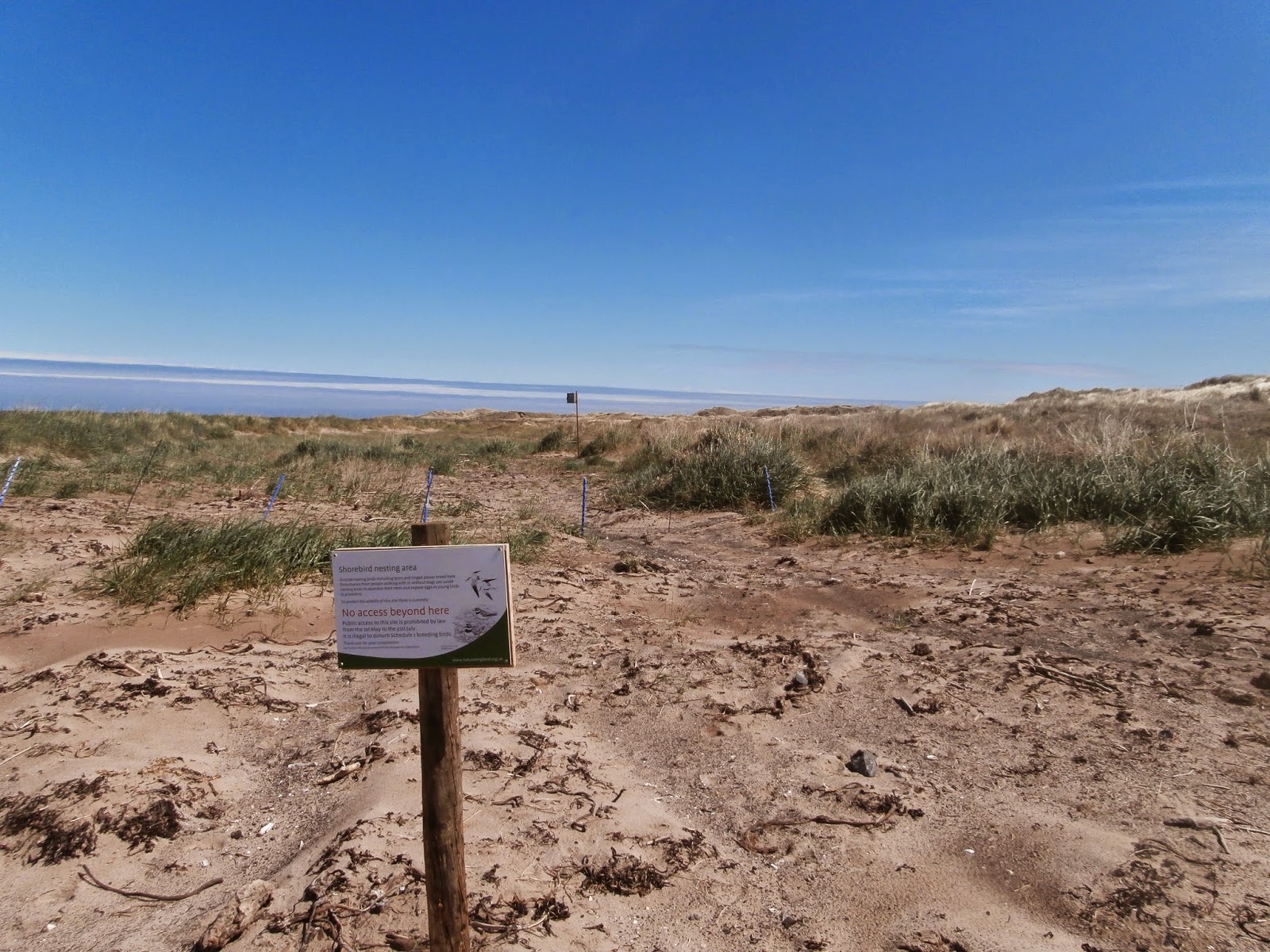
If we’d had flags we’d have waved them - it’s what we’ve been hoping, and working, for since long before the beginning of shorebird season. Preparation and planning is year around, and in April staff and volunteers set out laden with fence posts, coils of rope and a heavy mell hammer in order to fence off safe areas for the birds – as well as coils of plastic predator-proof netting to encircle potential nesting sites. Where to put them? Well… who can predict the ways of terns, but based on knowledge of their habits and the evidence of previous years, we fenced off five areas across the reserve, the mell becoming heavier with each post that we drove into the sand.

Little terns are the UK’s second rarest nesting seabird and Britain’s smallest seabird – delicately built, agile and very sweet. Despite their size, they migrate thousands of miles each year – all the way from West Africa to the Northumberland Coast. I’d never seen one except in photographs. You’ll love them, I was told. But where were they? We’d expected them at the beginning of May yet this brought only a couple of pairs to the reserve. Everything was ready… but the terns were late. Days passed. Where we had expected flapping, squeaking busyness, there was only silence and stillness. We began to wonder – would they come at all? What had happened, so far away?

Then news – on Twitter, appropriately enough – from the south: they’re on their way. Sussex had started to see their terns arrive. A message of hope for the north – and gradually, finally, they arrived, squeaking like rubber balls and dipping into the surface of the sea for fish. We still didn’t know what had delayed them, but they were here – and, we hoped, ready to mate. What’s the tern equivalent to mood lighting and Marvin Gaye? we wondered. Their late arrival meant there wasn’t much time… time to break out the really good sand eels.


In the meantime, shorebird wardens were watching the sites – watching, waiting, and commiserating with those whose walks were cut shorter by the fenced off areas. The little terns are a Schedule 1 species, meaning it is a criminal offence to disturb them. Sadly there are many hazards for a species that lays its eggs in small scrapes in the sand – including, but not limited to crows, gulls, kestrels, foxes, humans, dogs off leads, high winds, high tides, and their own sometimes poor sense in choosing nesting spots. After the joy of our first egg, the fear (I wonder: is this what parenthood feels like?). They are so very vulnerable. Yet these brave little birds return, year on year. And we do what we can to help.

Yet every intervention is a gamble - putting up the predator-proof netting runs the risk of treading on scrapes or eggs, causing the birds to lose their bearings, or simply leading them to abandon the site. We move swiftly and carefully to complete the tasks - normally barefoot. Every now and then a sharp blade of the marram grass on the dunes prompts an exclamation, but we keep moving - eyes downward - as the terns flutter and squeak above us. We have ten minutes, max - in and out. Fingers fumble. We’re near the end of our time.


And then it is done and we move fast, a bee line to the dunes. We throw ourselves down, breathless, out of sight. Eyes glued to binoculars, we wait. Will they return? Will they find their scrapes? Have we done more harm than good? It’s a gamble, always. We wait, and wait... and after about ten minutes are rewarded in our efforts by the sight of the terns returning, one by one, to their scrapes. A quick count. A sigh of relief. They’re okay. Tonight, our local Mr Fox - however fantastic - will have to seek easier prey.

It’s an intense time, and though each successful stage comes as a relief it isn’t until the end of shorebird season that we’ll be able to really breathe again. When, we very much hope, we will see our little terns fledge. We celebrated our first egg. We’ll celebrate our first chick. But our first fledgling? Deck out the beach in bunting and ring the bells. We might even run to a commemorative plate.


Lindisfarne National Nature Reserve is situated on the North Northumberland coast and includes not only the Holy Island of Lindisfarne but 3500 hectares covering 65km of coastline. It is managed by Natural England. Our work with shorebirds is powered by both staff and volunteers and is part of The Little Tern Recovery Project – this work is part funded by the EU Life+ Nature Programme. If you are interested in volunteering on this or other projects on the reserve, please contact Annie Ivison at annie.ivison@naturalengland.org.uk or on 01289 381470.

Photographs copyright to Kevin Simmonds. Little terns are a schedule one species and may only be photographed by those with a license to do so. 


Monday, 7 September 2015

Brent Arrival

It's the time of year where we start to welcome our Scandinavian visitors such as light-bellied Brent geese to the reserve. Last week we had small groups of around 10 brent geese noted and numbers have continued to rise to around 300 today. With a peak of around 3,000 last year the arrivals have just started.


(c) JDD
 

Friday, 11 April 2014

11th April: Little Tern Recovery Project

Every year a special type of sea bird returns to our shores making a journey of thousands of miles. There are several types of terns that make Northumberland their home in the summer taking advantage of the marine larder that is only a few flaps away.

The Little Tern

Our smallest Tern species is the Little Tern which travels each April to breed at fewer than 60 sites nationally. After navigating its way from the depths of Africa to our shores the Little Terns story is not over. It has to find its place amongst the busy beaches, which is becoming increasingly difficult with climate change and coastal development.


An example of a potential Little Tern breeding site, complete with decoys and a lure that plays Little Tern calls

It is because of the threats to their survival that a national partnership project supported by EU LIFE+ programme has been established. What does this mean for Northumberland? With strong established colonies right here on the coast we have been included within the project. Natural England, National Trust, Northumberland AONB partnership and the RSPB have formed a partnership and recruited a project worker to work between established sites and any new satellite sites where ever they may crop up. This includes the Northumberland SPA from Low Newton through to LNNR and potentially further afield. The project is running nationally for 5 years and 3 years in Northumberland.

With the first sightings of our early arriving Sandwich Tern last week, it won’t be long before the breeding season gets fully underway. Everyone can help Little Terns and shore nesting birds on the Northumberland Coast. If you are visiting Holy Island or any of our brilliant beaches over the summer, you can help by keeping dogs on leads and take note of any signs or fenced off areas where shore birds may be breeding.

This is how the shore bird sites will look once the fencing and signs are up

But wait there are more ways to help! We are currently recruiting volunteers to help survey new shore bird sites as well as wardens for established areas. Any help is appreciated whether you can give a large or small amount of your time. If you want more information or have any sightings, please get in touch on 07768310629

I hope to write regular updates for the blog and keep everyone up to date with the project as the season goes on.

Mhairi Maclauchlan
Project Co-ordinator EU LIFE+ - Little Tern Recovery Project Northumberland

Thursday, 16 January 2014

10th January: Events for the New Year

It's time to blast away the cobwebs at Lindisfarne NNR! It's back to work after New Year on the Reserve which means looking to the year ahead and planning events for the upcoming months.

Reserve team have organised some drop-in events for the next few months:

On February 2nd a drop-in birdwatch is being held at the Fenham-Le-Moor hide - join us for your last chance to see light-bellied Brent geese and wading birds from our two-storey hide.

On February 19th you can bring the kids to 'Build-A-Bird' at the Window on Wild Lindisfarne for half-term - create fun craft versions of the birds you can see outside the Window.

Make your own flapping lapwing...

...and sandy shelduck card!


Join us on March 16th  for our birdwatch at Budle Bay - this is a great chance to see any late leaving wintering birds, and maybe even spot some early spring migrants!

You can see full details on our dedicated Events page, keep checking back for new events being added. All of our events are free.

Monday, 14 October 2013

5th October: First Autumn Birdwatch drop-in event a success

Our first drop-in event of the Autumn went very well, with lots of visitors coming to the large hide at Fenham-Le-Moor to view Lindisfarne's spectacular migratory winter birds.

Mass flight of wigeon - many large flocks like this were spotted from the hide

Many different species were seen, including large groups of light-bellied Brent, Barnacle and Pink-footed geese, Curlew, Redshank and Shelduck to name a few. 

In addition to the array of birds, hundreds of grey seals were spotted lounging on the sandbar before the tide came in. It was great to watch their courting behaviour and hear them calling to one another from such a short distance.

Our next drop-in event is Saturday 19th October, from 11.00 am to 1.00 pm at Budle Bay. Meet at the Budle Bay layby by the white railings. A special addition to this drop-in will be John Steele on hand to help you learn more about sketching the birds you will see. More information on our Events page.


Thursday, 5 September 2013

5th September: Autumn influx begins

At the weekend, Sunday 1st September, groups of light-bellied Brent geese were seen on the Flats near Holy Island - the first sightings of this species on Lindisfarne NNR this year!

This signals the beginning of the Autumn migrant birds arriving to the Reserve, a very exciting time. More and more young families of Brent, and many other species of wildfowl such as wigeon, will begin arriving over the next few weeks.

A group of light-bellied Brent in flight

The numbers of Brent geese on the flats are regularly counted, and are also picked up during the monthly Wetland Bird Survey (WeBS). You can look out for early groups of wintering birds from our two tier Fenham-Le-Moor hide, looking over the Flats.

Monday, 26 August 2013

23rd August: Birds moving on again

The Island is relatively quiet just now, between the breeding season and the start of the Autumn migration, but the annual influx of geese and other migrant wildfowl may well start turning up at the end of this month!

Flocks of geese have already been seen at Budle Bay, and heard flying over the nearby coast. It won't be long before one of our most special visitors, the light-bellied Brent geese, begin to arrive in their thousands. They will be joined by pink-footed geese, barnacle geese and a host of other wildfowl such as wigeon and teal.

Last year's Barnacle geese on the flats - this will soon be a common sight again!


For the birds that still remain here, there is still plenty of food for them to fuel up before their long migrations. The Reserve is full of flies and caterpillars just now, great food for swallows and warblers before they undertake their epic journeys back to Africa for the winter.